via The Daily Mail:
Bracketed statements are added commentary.]
The leader of a Satanic sex cult is facing a lengthy jail sentence after being found guilty of multiple counts of rape and child abuse. Colin Batley, 48, exercised absolute control over his sect in a seaside cul-de-sac – abusing and exploiting helpless children as ‘sex toys’ for more than a decade. He was found guilty yesterday of 35 sex offences against children and young adults. Yet social services were alerted to Batley’s child abuse in 2002 – and took no action. As a consequence, the former Tesco security guard was allowed to continue ‘preying on the young and vulnerable’ for a further eight years – with the full support of wife Elaine. At their semi in Kidwelly, South Wales, he would dress in hooded robes, chant before an altar and then orchestrate or participate in group sex with his female followers, including Jacqueline Marling and Shelly Millar. One helpless girl was ‘initiated’ when she was just 11 and threatened with death by ‘cult assassins’ if she did not comply. At least two of his young victims gave birth as a result of the ‘systematic and prolonged abuse’. Yesterday at Swansea Crown Court, Marling, 42, and Elaine Batley, 47, were found guilty of five counts including sexual activity and indecency towards children.
Millar, 35, was found guilty of two similar charges. Another woman, Sandra Iveson, was found not guilty of gross indecency. Those found guilty will be sentenced tomorrow and face ‘substantial’ jail terms. Colin Batley’s home was a typical semi in a typical cul-de-sac. But to the stream of visitors who trooped through the front door – especially on Sunday nights – it was the Temple. In the lounge, a white cloth would be draped over a table to form an altar with candles and burning incense; nearby were tanks full of snakes and Satanic symbols. Those present would put on hooded robes and wear upside-down crucifixes. There would be chanting, which would always end in group sex. Children, boys and girls as young as 11, were also ‘initiated’ – repeatedly sexually abused in other words – during ‘Black Masses’ at Batley’s home. There were at least five victims that we know of, but police believe there could have been many more. Yet these vile activities did not disturb the neighbours. Why? Because they were involved too. They lived in houses next to or opposite each other on the outskirts of Kidwelly (population 3,000) near Carmarthen. For more than a decade Clos Yr Onnen, Welsh for Ash Tree Close, was possibly the most depraved street in Britain. The proof was there, in black and white, on the charge sheet at Swansea Crown Court where Batley, his bisexual wife Elaine and their accomplices stood trial for a sickening catalogue of crimes.
All of them perpetrated by culprits living in the same road; perhaps the single most shocking fact of all.
This disturbing story begins not in Wales, however, but more than 200 miles away in East London. Batley, from Shoreditch, had a string of jobs including work as a Tesco security guard and on a fruit-and-vegetable stall. He also bred rottweiler dogs and Siamese cats. His outwardly mundane existence, we now know, masked a sinister private life. He and his wife had been dabbling with the occult ever since they were married 30 years ago and were obsessed with Aleister Crowley, the most notorious Satanist of the 20th century, the self-styled ‘Great Beast’. One of Crowley’s publications, the Book of the Law, includes the passage: ‘Let all chaste women be despised. Sex with anyone is not just permissible but to be encouraged.’ And this: ‘Some of the most passionate and permanent attachments have begun with rape. Rome was founded thereon.’ Apart from anything else, the Book of the Law provided justification for the couple’s own ‘open marriage’. Batley had sent a photo of his wife to the Readers’ Wives section of a pornographic magazine and this had led to them meeting ‘others for group activities’, the jury was told.
They included former dental nurse Jacqueline Marling and prostitute Shelly Millar, who both joined Batley’s occult ‘circle’. They were given matching tattoos of the Eye of Horus, the Egyptian falcon god depicted pecking out the eyes of Christ in Crowley’s works, and addressed Batley as ‘My lord’ (police found him listed under this name on Millar’s mobile phone). Such was Batley’s control over his wretched ‘coven’ that they had to pay him 25 per cent of their income. Every time Millar entertained a client, she would send Batley a text message to tell him how much she had been paid. She had sex with more than 3,000 clients over a two-year period, making about £2,000 a month, a quarter of which went to him. It explained how Batley, officially unemployed, could afford a £45,000 caravan and frequent holidays abroad.
Batley would later claim that he moved to Wales for health reasons – to escape the smog. A claim rather undermined by the fact that his coven also relocated to the principality. Police believe there was another reason for the exodus; they suspect that other members of the cult – who have not been identified – were based in Wales. The first East Londoner to arrive in Kidwelly was twice-married mother of four Sandra Iveson in 1995. The following year, the Batleys moved in. Two years later, Marling became their next-door neighbour and Millar, 35, an unmarried mother of two who was brought up a Catholic, completed the set. Did other residents have any inkling of the kind of people that were now living among them? Well, with hindsight, there were a few small clues. John Wheatland and his wife Marion, both in their seventies, couldn’t help but notice how Colin Batley was ‘over at Shelly’s all the time’. On another occasion, the Wheatlands encountered Millar and another woman kissing and touching each other in the supermarket. Yet they could not have imagined the extent of what was really going on behind the closed curtains of the so-called Temple. During occult gatherings it became the set of a horror movie.
Batley, in a hooded robe, would read out extracts from the Book of the Law, which had been typed out and laminated by his wife. Hanging above him on the wall was a gold ceremonial dagger and sitting menacingly nearby were his two rottweilers, Tutankhamun and Sekhet. One young victim told how Batley introduced her to the cult by raping her when she was 11, telling her that having sex with him was a ‘test’ and if she did not pass she would go to ‘the Abyss’. The victim, now in her twenties, told the court: ‘I did not want him to do what he was doing, but I did not have a choice because what Colin said happened. What Colin said went.’
The abuse continued for years. As a teenager she became pregnant by Batley, who prevented her from having an abortion saying that babies belonged to the cult and not to their mothers. Another victim, now in her thirties, said she was forced to have sex with Batley when she was 15. She was also ordered to perform sex acts on his wife and other men and women. ‘I was told I’d be killed if I didn’t become part of the cult,’ she said. ‘Colin Batley had a gun and brought it to meetings. I was so scared I just did what I was told. I was in the living room at his home and he told me there would be an initiation. I was called upstairs. Elaine was there. He would just snap his fingers and say, “Strip”.’
She said that on one occasion when she was 16, she was made to have sex with a boy of 15 – as Marling filmed them.
The girl was told she would be murdered by ‘cult assassins’ if she did not give in to Batley’s demands. Through a video link, she sobbed as she told how she was taken to other addresses by Batley where she had sex with other men. ‘I did it because I was told to by Colin.’ Another woman victim said she was recruited into the cult and became pregnant after becoming a ‘sexual plaything’ for the group. Batley ordered her not to abort her ‘occult child’. A male victim said that, as a teenager, he was tricked into having sex with Batley’s wife. The witness recalled how Batley promised to set him up with a girl and directed him to a dark bedroom. Once inside, he got into bed and then realised that the other person lying beside him was Elaine Batley. One of the charges against Shelly Millar was that she seduced a boy of 15. Millar claimed he was 16, and that she was teaching him how to have sex as he had a new girlfriend ‘he wanted to impress’. She had sex with him twice in Batley’s caravan in Tenby. Batley, it emerged during the trial, had been reported to Carmarthenshire Social Services in 2002 by a concerned relative. She said Batley had been abused by his own father and that ‘history was about to repeat itself’.
The warning went unheeded, allowing Batley and his cult to prey on youngsters week after week, month after month for another eight years. The Batleys had four children, one of whom, Damian, died of strangulation three years ago when a bizarre sex game went wrong. He was found hanging from his bedroom door at the family home and had been filming himself. Finally, last year, one of Batley’s victims went to the police. It was one of the girls he had impregnated as a teenager. She said she feared he might target her own child. Batley was tipped off about the police inquiry and, by the time he was arrested, had destroyed potential evidence. But officers found home-made films of two of his victims on his camcorder. [The circumstances surrounding the death of the Batleys' son seem highly questionable given that the family has already been accused of producing what very well might be commercial pornography]. Interviewed 11 times by detectives, he steadfastly maintained his innocence. The jury did not believe him. They saw him for what he was – ‘an evil and manipulative sexual predator’ who had used the cult and ‘black magic’ as a cover for his own perverted ends. Back in Kidwelly, there was relief at the verdicts. ‘I’m just glad they’ve all finally gone,’ said John Wheatland. He spoke for everyone in Ash Tree Close.
Sex cult was inspired by 'the Great Beast'
The cult’s inspiration, Aleister ‘the Great Beast’ Crowley, believed himself to be a prophet of a new age of personal liberty, controlled by the ancient Egyptian god Horus.
Showing posts with label occult symbolism. Show all posts
Showing posts with label occult symbolism. Show all posts
Saturday, March 14, 2015
Wednesday, July 10, 2013
Second Update to Occult Origins of the Counterculture
Here is another update to my Occult Origins of the Counterculture article. I still need to make a few minor revisions to the original article so hopefully that will be done within a few days.
In addition to the the shamanic ceremonies of First Nation peoples, another indigenous spiritual tradition that influenced Western occultism was the African religion of Vodun. Along with European folk magic, Vodun was merged into the syncretic religion of Lousiania voodoo, which by turn influenced the development of American spiritualism. In Haiti, a similar syncretic religion was created in the form of voodou, with many rituals and mythological figures overlapping with the American voodoo tradition. Both Louisiana voodoo and Haitian vodou were created when African slaves passed on to their descendants the traditional ceremonial dances of Africa under the guise of Catholic litanies following the suppression and criminalization of these ceremonies by slave owners. The religious suppression of the voodoo religion was a direct extension of the social policies enacted by Christian and Muslim colonization of Africa, which resulted in the murder of many Vodun priests as well as destruction of Vodun temples. One aspect of Vodun religion that was incorporated into its syncretic North American incarnations was the idea of continuity between the world of the dead and the living, in that ancestors were deified and considered an ever present part of the family through spiritual communion.
Although voodoo has been sensationalized as being oriented towards accumulation of material wealth and predatory magical powers, its origins are far more nuanced, centered around a belief in a nebulous force which pervades all aspects of existence. Because the Voodoo creation myth emphasizes metaphysical interconnectedness, extending emotional, material and spiritual support to family and community is considered an intrinsic expression of religious worship. Vodun cosmology also emphasizes the divinity of the natural world, formulated in a hierarchy of spirits from those that govern weather to smaller spirits who inhabit rivers, streams and even individual rocks and trees. Animism offers a continuity in belief between African tradition and that of European occultism. The overlapping belief in nature devas and elemental spirits formed the basis of many divination rituals and conjuration methods, especially regarding the use of botanical magic.
Occurring simultaneously with the rise of voodoo was the folk magic system of hoodoo which made use of European magical grimoires that typically contained translations of ancient Kabbalistic documents as well as unorthodox interpretations of biblical texts. The Old Testament is inundated with passages that justify slavery as a necessary, even righteous social institution, however vodoo and hoodoo practitioners emphasized the story of Exodus as a representation of the freedom-seeking impulse. When Moses lead the Israelites out of bondage in the Book of Exodus, the obvious parallel was the transatlantic slave trade, with the abolition movement seen by hoodoo conjurers as divine imperative. Largely for this reason, the primary magical texts utilized by hoodoo practitioners were the Sixth and Seventh Books of Moses, a compendium of magical seals, astrological treatises, and incantations taken from European occult literature, Talmudic magic names and Christian Biblical passages. The texts, although primarily printed in the 18th and 19th centuries, were purportedly lost writings of Moses and they circulated throughout The United States, the Caribbean, West Africa, Scandinavia and Central Europe, widely known as "the Black Bible". Moses, who was traditionally depicted carrying a serpent on his staff, became a figure who easily combined elements of the Vodun serpent god Damballa, primordial creator of life and archetypal father figure, with orthodox religious doctrines and European concepts of Luciferian Enlightenment.
Although recent years have, to a certain extent, seen the recognition of the voodoo religion as a richly varied cultural tradition, the central role of voodou and hoodoo conjurers in galvanizing slave revolts has not been fully documented, since most historians of the colonial time period held perspectives that would have been favorable to the economic interests of plantation owners. What has been conclusively documented is that, in 1791, under the cover of vodou ceremonies, Haitian slaves organized an uprising that went on to shut down the majority of sugar plantations on the island. Haiti, one of two sovereign states located on the island of Hispaniola, was a particularly appropriate locale for an uprising since its inhabitants had been subjected to some of the most horrific brutalities of the transatlantic slave trade. When Christopher Columbus and his men had first arrived on the shores of Hispaniola, they quickly established an enforced labor system in which the native Arawak people collected gold, with enforcement occurring via the method of slower laborers having their hands cut off. The original Arawak population has been roughly estimated to be at least 250,000, yet within less than 25 years, through murder, mutilation, malnutrition and mass suicide, that number was reduced to 50,000.
By 1650 almost none of the original Arawaks or their descendants remained on the island. The importation of African slaves soon replaced their rapidly dwindling numbers, however the population of foreign slaves was also continually replenished because their death rate was vastly higher than their birth rate due to similar brutalities. The unintended consequence for European colonists was that Haitian slaves were able to more effectively preserve African cultural traditions through vodou ceremonies, eventually leading to a resistance movement which was uniquely unified in comparison to other areas of colonial America. One of the most influential leaders of the rebellion was a vodou priest named Francois Mackandal, who created a secret organization connecting escaped slaves (Maroons) with those who still lived on plantations. The Maroons, a mixture of Native Americans and Africans, combined African agricultural practices with Native American wilderness skills as the number of former slaves surviving outside of the settlements of the colonists expanded. After the Maroons torched plantations and chased out the owners, Mackandal was burned alive in the public square of Cap-Francais on account of his role in organizing the insurrection. His actions set a strategic model for the Haitian Revolution of 1791, which is generally considered to be the most successful slave rebellion in the Western hemisphere.
Compared to the American Revolution, which exclusively granted rights to the minority of the white male population that owned property, Haiti's revolution sought and achieved political rights for the entire population. Although the insurrection was accompanied by horrific and dehumanizing massacres on both sides of the conflict, by 1803 slavery had been abolished and decolonization was attained. The secret society organized by Mackandal played no small part in Haitian resistance movements, and there is evidence to suggest that much of the symbolism and themes adopted by vodou-practicing Maroons were a product of Freemasonic influence. Anthropologist Richard Stanley gave the following statement in the special feature section of his documentary on Haitian vodou, The White Darkness: “Most books consider voodoo to be a combination of Roman Catholicism and African mythology. There are elements of voodoo that have nothing to do with either. There is a huge amount of Old World Masonic imagery—for example, pentagrams, which suggests that perhaps three or four hundred years ago slaves were initiated by previous imperialists. That's something that hasn't been talked about. I was told about the various handshakes and rituals that I would need to know. Altes Paul (voodou sorcerer) warmed to me after I gave him a third degree masonic handshake, convinced that I was a fellow Mason.”
In his book on Haitian vodou culture, The Serpent and the Rainbow, ethnobotanist Wade Davis describes a network of secret societies covering the country, each maintaining control of its own territorial jurisdiction. Haitian vodou cults inevitably contained elements of Freemasonic tradition, including ritual handshakes, initiation rites, banners and even a hierarchical degree system. This network is described in the book as a “quasi-political” force that effectively managed to organize a parallel government and expel the regime at Port-au-Prince. Unlike Freemasonry, vodou secret societies granted membership to women, many of whom became political leaders in their own right. This history of cultural influence reveals the ideological complexity of Freemasonry, which at times has participated in, and even instigated, the furthest abuses of colonial social institutions, and at others has worked towards political sovereignty of oppressed peoples.
The cultural influence of European colonists on Haitian secret societies was most likely a factor in the vodou cults' adoption of Masonic rites and regalia. This same influence may have also played a role in shaping the iconography of West African secret societies, which were located in the same approximate geographical vicinity from which Vodou cults descended. This West African cult network had risen to prominence precisely at the time when European slave traders invaded African villages and negotiated the right to abduct community members with the elders of their group, many of whom formed a fraternal order called The Ekpe. Similar to the vodou societies, the Ekpe organizational structure mirrored Freemasonry in all of its essential aspects, indicating the strong possibility that much of the imagery and mythology of these West African cults were synthesized as a consequence of collaboration with Freemasonic slave traders. The Ekpe hierarchy consisted of nine initiatory grades, with each successively higher rank ensuring greater prestige within the community. The cult society maintained the loyalty of their community by sponsoring elaborate masquerades, while also acting as a court system for the enforcement of debt collection, the nonpayment of which could result in the debtor being sold to foreign slave traders. Ekpe cults enacted a wide variety of punishments for nonpayment, ranging from fines to property seizure to execution. Those community members who were executed were left tied to trees with their lower jaws removed as a warning that others should obey the dictates of the cult.
Given the Ekpe's participation in enabling the transatlantic slave trade, it may seem counterintuitive that the group provided cultural and spiritual inspiration for another secret society, the Abakua, who would later act as a liberatory force against colonial occupation in Cuba. The latter organization was started by a group of former Ekpe members who had been imported as slaves into Havana, after which they reorganized to form a lodge, Efik Buton, named after a settlement in the Nigerian city of Calabar. Like the Vodou and Ekpe cults, the Abakua Society is structured around a graded degree system and oaths of secrecy are required during initiatory ceremonies. During the Christian festival, Day of the Three Kings, members danced through the streets wearing the Abakua ceremonial outfit, a checkerboard dress and a headpiece topped with tassles. The dress is reminiscent of the checkerboard floors of Freemasonic Lodges, whereas the headpiece is remarkably similar to the fez worn by the Shriners (Ancient Arabic Order of the Nobles of the Mystic Shrine), who were established as an appendant body to Freemasonry.
Abakua was originally formed as a mutual aid society committed to resisting Spanish authorities by purchasing slaves in order to release them. In recent years the Abakua Society has been reframed as a national symbol of anticolonial liberation struggle by historians such as Dr. Ivor Miller, who has documented the group's cultural narrative through interviews with Abakua elders as well as more conventional academic sources. Miller states that, during the Cuban wars of independence, members of the Abakua formed associations with famous Freemasons like Antonio Maceo, Carlos Manuel de Céspedes and other leaders of the Mambi Independence army which fought to end slavery.This documentation should demonstrate that attempts to classify Freemasonry as necessarily always working towards oppressive ends are short-sighted simplifications of a multi-faceted legacy. However, the fraternity's reputation for conspiracy and intrigue is well deserved, and its history includes many reprehensible acts such as playing a central organizing role in colonial racism. Where the furthest extremes of this more problematic representation of societal conditioning play out tends to be in the advanced Freemasonic degrees which are heavily influenced by royalism and an agenda for concentration of wealth and resources.
To cite one example, Confederate war General Albert Pike was the Sovereign Grand Commander of the Scottish Rite's Southern Jurisdiction, who also wrote the primary reference book for Freemasonic ritual, Morals and Dogma. In Klu Klux Klan: Its Origin, Growth and Disbandment, Vanderbilt University history department chair Walter L. Fleming wrote “General Albert Pike, who stood high in the Masonic order, was the chief judicial officer of the Klan.” Pike was the owner-publisher of the Memphis Daily Appeal, and on April 16, 1868, he authored an editorial stating the following: “With negroes for witnesses and jurors, the administration of justice becomes a blasphemous mockery. A Loyal League of negroes can cause any white man to be arrested, and can prove any charges it chooses to have made against him...The disenfranchised people of the South...can find no protection for property, liberty or life, except in secret association...We would unite every white man in the South, who is opposed to negro suffrage, into one great Order of Southern Brotherhood, with an organization complete, active and vigorous, in which a few should execute the concentrated will of all, and whose very existence should be concealed by all but its members.”
As Confederate commissioner of Indian affairs, General Pike negotiated a treaty of alliance between the Confederate government and Native American tribes. One of the signatories of this document was Freemason and Cherokee Chief John Ross. On May 5, 1855, Ross wrote a letter to Reverend Evan Jones, in which he described a “secret society” that had attempted to invade the Cherokee Nation: “It seems that there has been a secret society organized in Delaware and Saline Districts, auxiliary to a Mother Lodge in some of the States or Territories of the United States, and the enclosed copy is a form of the oath it is said to be administered to the members of the Society. But I do not apprehend that the authors of this sinister plot can possibly dupe the Cherokee people into their own ruin and downfall, as the schemes when found out will only render themselves more odious to all who feel an interest in the prosperity and welfare of the Nation.” The oath attempted to bind the Cherokee nation in support for slavery, and to “...support any person that you may be instructed to, by the Mother Lodge, for any office in the Cherokee Nation or anywhere else, and to assist any member that may get into difficulty on account of being a brother of the Secret Society and to keep secret the names of the Brothers of the Society and other secrets of the Society.”
The secret society to which Chief Ross was referring was the Cherokee branch of the Knights of the Golden Circle (K.G.T), a fraternal organization that included in its membership many prominent Cherokees including Chief Stand Watie, who was also a Freemason affiliated with Federal Lodge Number One in Washington D.C. The Constitution to this adjunct organization states “No person shall become a member of the Knights of the Golden Circle in the Cherokee Nation who is not a pro-slavery man.” The Kansas Encyclopedia of 1912 states that the organization was formed as part of the Freemasonic Blue Lodges. Despite this uncharacteristic and obviously strategic inclusion of Native Americans by a Freemasonic sect, the Grand Lodge of Arkansas failed to recognize the charters of lodges registered in Native American territory following the end of the Civil War.
The overarching goal of the Knights of the Golden Circle was to create a circular-shaped Southern empire founded on slavery and centered in Havana, Cuba with jurisdictions extending throughout the Caribbean, to the Southern portion of the United States, the Gulf of Mexico, and Central America. The intended addition of fifteen new slave-holding states was to persuade Congress to abandon the goal of abolition. The economic security of the empire was hoped to be provided by slave labor capable of supporting industries including sugar, cotton, tobacco, rice, coffee, indigo and mining.
The political influence of the Knights is thoroughly detailed in The Private Journal and Diary of John H. Surratt, the Conspirator, which describes the author's induction into the fraternity through an elaborate ceremonial rite. Surratt discovered that prominent members of the K.G.C. included congressmen, cabinet members, judges, politicians and actors.. He also reveals the organization's intent to assassinate Abraham Lincoln, a plan whose formation began before the President's inauguration and was finalized with the actions of K.G.C. member John Wilkes Booth. Surratt had been accused of plotting the assassination and narrowly escaped arrest by fleeing the country. His mother, who owned the boarding house where the plot was conceived, was convicted of conspiracy and hanged by the United States Federal Government.
In addition to Freemasonry's role in pursuing colonial policy and intrigue in the Americas, the fraternity has also been unequivocally active in suppressing indigenous populations on the African continent. Renowned statesman, founder of Debeers diamond monopoly and 33rd degree Freemason Cecil Rhodes was one of the primary architects of the laws that would later enable apartheid in South Africa. For over forty years the Cape Colony had been based on laws that allowed the entire population to vote for representatives of the Assembly, irrespective of the race of the voter. Rhodes utilized his role as Prime Minister of the Cape to pass two laws that removed large numbers of native Africans from the electoral role. The Glen Grey Act strictly limited the amount of land Africans could possess, while the other law tripled the property requirements for the vote. The system Rhodes helped to set in place would develop into a framework for racial segregation that enabled white supremacy while reducing black Africans to second class status. The ultimate goal was to unite the entire world under an Anglo-Saxon empire intended to include Africa, South America, much of the Middle East, the East Asian coast and South Pacific Islands.
Once again, a prominent Freemason would call for the formation of a secret society to curtail the political rights of people of color. In his first will, Cecil Rhodes acknowledged plans for a “secret society” aiming towards “the extension of British rule throughout the world”, a goal that would be accomplished by the “ultimate recovery of the United States as an integral part of the British Empire.” The plan would be finalized in “consolidation of the whole Empire, the inauguration of a system of Colonial Representation in the Imperial Parliament which may tend to weld together the disjointed members of the Empire, and finally the foundation of so great a power as to hereafter render wars impossible and promote the best interests of humanity.” This organization, The Society of the Elect, was the inner committee for a larger group, the Round Table Movement, which would establish the elite Rhodes scholarship program before finally attempting to implement neocolonial imperialism by way of global think tanks and non-governmental organizations.
In his exhaustive history of Western civilization, Tragedy and Hope, Harvard history professor and U.S. military political consultant Carrol Quigley inserts the following infamous quote: “There does exist, and has existed for a generation, an international Anglophile network which operates, to some extent, in the way the radical Right believes the Communists act. In fact, this network, which we may identify as the Round Table Groups, has no aversion to cooperating with the Communists, or any other groups, and frequently does so. I know of the operations of this network because I have studied it for twenty years and was permitted for two years, in the early 1960’s, to examine its papers and secret records. I have no aversion to it or to most of its aims and have, for much of my life, been close to it and many of its instruments.” He further elaborates on the machinations of the Round Table group in another book, The Anglo-American Establishment: “This organization has been able to conceal its existence quite successfully, and many of its most influential members, satisfied to possess the reality rather than the appearance of power, are unknown even to close students of British history.”
The Society of the Elect was composed of a small handful of political leaders, including Freemason Lord Alfred Milner, who once stated “My patriotism knows no geographical but only racial limits. I am a British Race patriot.” Due to his success as a colonial administrator in South Africa, Milner was made a baron in 1901 and a viscount in 1902. After his retirement in 1921 Milner was appointed a Knight of the Garter, designating affiliation with the Order of the Garter, an organization which contains no more than 24 members including the British Royal Family. Society of the Elect member Reginald Baliol Brett, later known as Lord Esher, was also a friend of royalty, in addition to being a member of Lord Elgin's South African War Commission. Esher was known to be a confidant of Queen Victoria, as well as the most significant advisor to King Edward VII and King George V.
The political authority of the Round Table group in South Africa continued an extensive tradition combining Freemasonry and royalism on the continent. The Royal African Company was a slaving company founded by the House of Stuart, previously mentioned for their role in establishing the Blue degrees of Freemasonry. The company was led by James, Duke of York, the younger brother of James II, and was responsible for the transport of approximately 5,000 slaves per year. The total number of slaves transported between 1672 and 1689 is estimated to be between 90,000 and 100,000. Many of these slaves were branded with the letters DY, in reference to the Duke of York, while others were branded with the company's initials, RAC. The company was granted a monopoly in the region and given the authority to maintain troops, exercise martial law and capture any ships that defied the terms of their monopoly in the area. Revenues derived from slave-trading were divided equally between the King and company shareholders. Its profits were so significant that the Royal African Company played a critical role in the economy of London.
The stage of colonization defined by military conquest can be represented by the company founded by the House of Stuart, whereas the political imposition enacted by the Round Table groups, while no less destructive in its aims, is contingent upon neocolonial policies which seek to hide cultural subjugation under a guise of ostensibly democratic representation. At the 1919 Paris Peace Conference, a senior Society of the Elect member named Lionel Curtis proposed the idea of establishing what Quigley describes as an “Anglo-American Institute of foreign affairs”, organized for the purpose of preventing future wars. This organization became known as the Royal Institute for International Affairs (RIIA), also referred to as Chatham House, and its U.S. counterpart became the Council on Foreign Relations. RIIA is now known as the second most influential think tank in the world, behind the Brookings Institute. The Queen of England is designated as the official patron of Chatham House, and through it, as well as other non-state actors, the influence of royalism maintains a covert presence in the international political process.
That Lord Milner, a key member of the Round Table groups, would also claim Knighthood in the Order of the Garter is likely no coincidence, considering that the Order is itself founded on the myth of King Arthur's Round Table. The Order of the Garter is the highest order of chivalry in England, considered to be the pinnacle of the British honors system after hereditary peerages, which are now normally only given to members of the Royal Family. Membership in the Order is always bestowed as the sole prerogative of the Monarch. In the historical treatise, Order of the Garter, politician, Freemason, royalist sympathizer and court astrologer Elias Ashmole contends that “The Order of the Garter was formed by Edward III, perhaps in imitation of King Arthur's Knights of the Round Table.” Froissart's Chronicles, recognized as the primary expression of the 14th century chivalric revival, states “The King of England took pleasure to re-edify the Castle of Windsor, which was begun by King Arthur, and there first began the Table Round, whereby sprang the fame of so many noble knights throughout all the World. Then King Edward determined to make an Order and a Brotherhood...to be called Knights of the Blue Garter, and a feast to be kept yearly on St. George's Day.”
Arthurian legend tells the story of how the Round Table was designed to seat 24 knights, in parallel with the strict membership limitation of 24 within the Order of the Garter. There are other indications of the Order's origins in esoteric symbolism as well, such as its insignia which depicts a red cross on a white background, the same image that was carried on the banners of the Knights Templar. The red cross in the Order's insignia is depicted in the center of an 8-pointed star, traditionally known as the star of Venus or Ishtar. Within Babylonian and Assyrian cultures, the 8-pointed star of Ishtar was an astrological representation of the four cardinal directions divided by the two solstices and equinoxes.
Taken together, this symbolic imagery likely indicates the Order's association with ancient mystery schools that trace a direct line of descent from the cults of antiquity through mystical Catholic orders to the occult fraternities that form the basis of today's shadow government system.
The Order of the Garter's close relationship with Freemasonry is suggested by observing the extensive number of high-ranking Freemasons who have also been members of the Royal Family. The United Grand Lodge of England is the main governing body of Freemasonry within England and other Commonwealth countries. As the oldest Grand Lodge in the world, according to its records, the lodge is often recognized as the “home Grand Lodge” by international Freemasons. The current Grand Master of the lodge is Prince Edward, Duke of Kent, who continues an uninterrupted tradition of heading the lodge as royalty since it began keeping records in 1813. The book 10,000 Famous Freemasons, published by Macoy Publishing and Masonic Supply Company, claims that Prince Philip, husband of Queen Elizabeth, was initiated into Freemasonry in 1952, stating: “Present at the initiation were the Earl of Scarbrough, Grand Master...and Geoffrey Fisher, archbishop of Canterbury. The lodge has many ties with the royal family as King Edward VII served as its first master in 1896 when he was Prince of Wales. King George VI...served as master when he was Duke of York.”
There is a certain amount of historical evidence intimating that the Royal Family's preoccupation with Arthurian legend, and concurring membership in secret societies, may not be a simple matter of antiquated pomp and circumstance, but instead a deliberate attempt to conceal a historical pedigree that could damage the family's claim to support democratic political structures. In the book Holy Blood, Holy Grail, authors Baigent, Leigh and Lincoln unearth documents that they claim provide evidence of a secret society existing for the purpose of housing genealogical records that trace the origins of present reigning Monarchs to the Merovignian dynasty, which was ostensibly deposed in 751. The authors believe that these records were maintained by secret societies, including the Rosicrucians, Templars, and Freemasons, which sought to conceal evidence of the royal bloodline whose descendants would go on to take leadership roles in these same secret societies. In the course of pursuing research for the book, the authors discovered a series of pamphlets that contained royal pedigrees stretching from the early Middle Ages to the present day.
Three of the authors linked to the dissemination of the pamphlets were later found to have died under mysterious circumstances that point strongly towards murder. Baigent, Leigh and Lincoln managed to locate the daughter of another of the authors, who was unaware of her father's apparent interest in genealogy, yet also informed her interviewers that he had been denied a visa for entry into the United States on account of suspected espionage or other clandestine activity. Although the book has been dismissed by professional scholars as pseudo-history, probably in large part because of the authors' belief that the royal bloodlines they studied may have descended from Jesus, the dizzying volume of data contained within the book is unparalleled in scope, and far too exhaustively researched to be based purely in speculation. While many fans of the book argue that Holy Blood... exposes an unorthodox religious history with liberatory implications, few of these readers have speculated as to why it may be that a genuinely altruistic organization would resort to murder to maintain the cover of secrecy.
One possible explanation for this seeming paradox is that high-ranking initiates did, in fact, work to subvert dominant social institutions, not as a secret ploy to liberate the masses, but instead as a route to consolidate political and economic power for themselves and their descendants. In this scenario, a democratic political framework would be the ideal camouflage for exercising such a strategy, and the numerous proto-globalist projects of the Round Table movement may serve as prime example of this pattern. What this supposition amounts to is a literal re-establishment of the divine right of kings under cover of representative government. Of particular interest in pursuing this line of reasoning is historical data linking the legend of King Arthur's Round Table, and perhaps, Cecil Rhodes' Round Table groups as well, to the royal bloodlines from which present day Monarchs descended.
Wolfram von Eschenbach is the author of Parzival, which is considered to be one of the most important works of Arthurian literature, particularly for its focus on the Holy Grail which shifted focus away from King Arthur himself to other Knights of the Round Table. The story recounts the tale of Lohengrin, son of the Grail King Parzival and member of a secret order whose mission is to provide lords to kingdoms that have lost their protectors. Lohengrin was said to have rescued and then married the duchess of Brabant, after which he informed her that she was forbidden from asking him about his origins or ancestry. When the duchess finally succumbed to curiosity, Lohengrin abruptly departed, leaving behind a child of uncertain lineage. According to Eschenbach, this child was either the father or grandfather of Godfroi de Boullion, founder of the Knights Templar who captured Jerusalem from the Saracens. Bouillon himself was the subject of numerous legends attributing him with supernatural lineage, such as the story of his half-serpent daughter Melusine. Bouillon is also the subject of legend amongst Freemasons, who erected a statue of him alongside Lichfield Chapel which is considered to be a Christian holy site. In his book on Cecil Rhodes' wills, Society of the Elect member William T. Stead makes the following comment. In light of the historical and mythological data expressed above, this otherwise inexplicable quote becomes far more intriguing: “He aspired to be the creator of one of those vast semi-religious, quasi-political associations which, like the Society of Jesus, have played so large a part in the history of the world. To be more strictly accurate, he wished to found an Order as the instrument of the will of the Dynasty, and while he lived he dreamed of being both its Caesar and its Loyola.”
In addition to the the shamanic ceremonies of First Nation peoples, another indigenous spiritual tradition that influenced Western occultism was the African religion of Vodun. Along with European folk magic, Vodun was merged into the syncretic religion of Lousiania voodoo, which by turn influenced the development of American spiritualism. In Haiti, a similar syncretic religion was created in the form of voodou, with many rituals and mythological figures overlapping with the American voodoo tradition. Both Louisiana voodoo and Haitian vodou were created when African slaves passed on to their descendants the traditional ceremonial dances of Africa under the guise of Catholic litanies following the suppression and criminalization of these ceremonies by slave owners. The religious suppression of the voodoo religion was a direct extension of the social policies enacted by Christian and Muslim colonization of Africa, which resulted in the murder of many Vodun priests as well as destruction of Vodun temples. One aspect of Vodun religion that was incorporated into its syncretic North American incarnations was the idea of continuity between the world of the dead and the living, in that ancestors were deified and considered an ever present part of the family through spiritual communion.
Although voodoo has been sensationalized as being oriented towards accumulation of material wealth and predatory magical powers, its origins are far more nuanced, centered around a belief in a nebulous force which pervades all aspects of existence. Because the Voodoo creation myth emphasizes metaphysical interconnectedness, extending emotional, material and spiritual support to family and community is considered an intrinsic expression of religious worship. Vodun cosmology also emphasizes the divinity of the natural world, formulated in a hierarchy of spirits from those that govern weather to smaller spirits who inhabit rivers, streams and even individual rocks and trees. Animism offers a continuity in belief between African tradition and that of European occultism. The overlapping belief in nature devas and elemental spirits formed the basis of many divination rituals and conjuration methods, especially regarding the use of botanical magic.
Occurring simultaneously with the rise of voodoo was the folk magic system of hoodoo which made use of European magical grimoires that typically contained translations of ancient Kabbalistic documents as well as unorthodox interpretations of biblical texts. The Old Testament is inundated with passages that justify slavery as a necessary, even righteous social institution, however vodoo and hoodoo practitioners emphasized the story of Exodus as a representation of the freedom-seeking impulse. When Moses lead the Israelites out of bondage in the Book of Exodus, the obvious parallel was the transatlantic slave trade, with the abolition movement seen by hoodoo conjurers as divine imperative. Largely for this reason, the primary magical texts utilized by hoodoo practitioners were the Sixth and Seventh Books of Moses, a compendium of magical seals, astrological treatises, and incantations taken from European occult literature, Talmudic magic names and Christian Biblical passages. The texts, although primarily printed in the 18th and 19th centuries, were purportedly lost writings of Moses and they circulated throughout The United States, the Caribbean, West Africa, Scandinavia and Central Europe, widely known as "the Black Bible". Moses, who was traditionally depicted carrying a serpent on his staff, became a figure who easily combined elements of the Vodun serpent god Damballa, primordial creator of life and archetypal father figure, with orthodox religious doctrines and European concepts of Luciferian Enlightenment.
Although recent years have, to a certain extent, seen the recognition of the voodoo religion as a richly varied cultural tradition, the central role of voodou and hoodoo conjurers in galvanizing slave revolts has not been fully documented, since most historians of the colonial time period held perspectives that would have been favorable to the economic interests of plantation owners. What has been conclusively documented is that, in 1791, under the cover of vodou ceremonies, Haitian slaves organized an uprising that went on to shut down the majority of sugar plantations on the island. Haiti, one of two sovereign states located on the island of Hispaniola, was a particularly appropriate locale for an uprising since its inhabitants had been subjected to some of the most horrific brutalities of the transatlantic slave trade. When Christopher Columbus and his men had first arrived on the shores of Hispaniola, they quickly established an enforced labor system in which the native Arawak people collected gold, with enforcement occurring via the method of slower laborers having their hands cut off. The original Arawak population has been roughly estimated to be at least 250,000, yet within less than 25 years, through murder, mutilation, malnutrition and mass suicide, that number was reduced to 50,000.
By 1650 almost none of the original Arawaks or their descendants remained on the island. The importation of African slaves soon replaced their rapidly dwindling numbers, however the population of foreign slaves was also continually replenished because their death rate was vastly higher than their birth rate due to similar brutalities. The unintended consequence for European colonists was that Haitian slaves were able to more effectively preserve African cultural traditions through vodou ceremonies, eventually leading to a resistance movement which was uniquely unified in comparison to other areas of colonial America. One of the most influential leaders of the rebellion was a vodou priest named Francois Mackandal, who created a secret organization connecting escaped slaves (Maroons) with those who still lived on plantations. The Maroons, a mixture of Native Americans and Africans, combined African agricultural practices with Native American wilderness skills as the number of former slaves surviving outside of the settlements of the colonists expanded. After the Maroons torched plantations and chased out the owners, Mackandal was burned alive in the public square of Cap-Francais on account of his role in organizing the insurrection. His actions set a strategic model for the Haitian Revolution of 1791, which is generally considered to be the most successful slave rebellion in the Western hemisphere.
Compared to the American Revolution, which exclusively granted rights to the minority of the white male population that owned property, Haiti's revolution sought and achieved political rights for the entire population. Although the insurrection was accompanied by horrific and dehumanizing massacres on both sides of the conflict, by 1803 slavery had been abolished and decolonization was attained. The secret society organized by Mackandal played no small part in Haitian resistance movements, and there is evidence to suggest that much of the symbolism and themes adopted by vodou-practicing Maroons were a product of Freemasonic influence. Anthropologist Richard Stanley gave the following statement in the special feature section of his documentary on Haitian vodou, The White Darkness: “Most books consider voodoo to be a combination of Roman Catholicism and African mythology. There are elements of voodoo that have nothing to do with either. There is a huge amount of Old World Masonic imagery—for example, pentagrams, which suggests that perhaps three or four hundred years ago slaves were initiated by previous imperialists. That's something that hasn't been talked about. I was told about the various handshakes and rituals that I would need to know. Altes Paul (voodou sorcerer) warmed to me after I gave him a third degree masonic handshake, convinced that I was a fellow Mason.”
In his book on Haitian vodou culture, The Serpent and the Rainbow, ethnobotanist Wade Davis describes a network of secret societies covering the country, each maintaining control of its own territorial jurisdiction. Haitian vodou cults inevitably contained elements of Freemasonic tradition, including ritual handshakes, initiation rites, banners and even a hierarchical degree system. This network is described in the book as a “quasi-political” force that effectively managed to organize a parallel government and expel the regime at Port-au-Prince. Unlike Freemasonry, vodou secret societies granted membership to women, many of whom became political leaders in their own right. This history of cultural influence reveals the ideological complexity of Freemasonry, which at times has participated in, and even instigated, the furthest abuses of colonial social institutions, and at others has worked towards political sovereignty of oppressed peoples.
The cultural influence of European colonists on Haitian secret societies was most likely a factor in the vodou cults' adoption of Masonic rites and regalia. This same influence may have also played a role in shaping the iconography of West African secret societies, which were located in the same approximate geographical vicinity from which Vodou cults descended. This West African cult network had risen to prominence precisely at the time when European slave traders invaded African villages and negotiated the right to abduct community members with the elders of their group, many of whom formed a fraternal order called The Ekpe. Similar to the vodou societies, the Ekpe organizational structure mirrored Freemasonry in all of its essential aspects, indicating the strong possibility that much of the imagery and mythology of these West African cults were synthesized as a consequence of collaboration with Freemasonic slave traders. The Ekpe hierarchy consisted of nine initiatory grades, with each successively higher rank ensuring greater prestige within the community. The cult society maintained the loyalty of their community by sponsoring elaborate masquerades, while also acting as a court system for the enforcement of debt collection, the nonpayment of which could result in the debtor being sold to foreign slave traders. Ekpe cults enacted a wide variety of punishments for nonpayment, ranging from fines to property seizure to execution. Those community members who were executed were left tied to trees with their lower jaws removed as a warning that others should obey the dictates of the cult.
Given the Ekpe's participation in enabling the transatlantic slave trade, it may seem counterintuitive that the group provided cultural and spiritual inspiration for another secret society, the Abakua, who would later act as a liberatory force against colonial occupation in Cuba. The latter organization was started by a group of former Ekpe members who had been imported as slaves into Havana, after which they reorganized to form a lodge, Efik Buton, named after a settlement in the Nigerian city of Calabar. Like the Vodou and Ekpe cults, the Abakua Society is structured around a graded degree system and oaths of secrecy are required during initiatory ceremonies. During the Christian festival, Day of the Three Kings, members danced through the streets wearing the Abakua ceremonial outfit, a checkerboard dress and a headpiece topped with tassles. The dress is reminiscent of the checkerboard floors of Freemasonic Lodges, whereas the headpiece is remarkably similar to the fez worn by the Shriners (Ancient Arabic Order of the Nobles of the Mystic Shrine), who were established as an appendant body to Freemasonry.
Abakua was originally formed as a mutual aid society committed to resisting Spanish authorities by purchasing slaves in order to release them. In recent years the Abakua Society has been reframed as a national symbol of anticolonial liberation struggle by historians such as Dr. Ivor Miller, who has documented the group's cultural narrative through interviews with Abakua elders as well as more conventional academic sources. Miller states that, during the Cuban wars of independence, members of the Abakua formed associations with famous Freemasons like Antonio Maceo, Carlos Manuel de Céspedes and other leaders of the Mambi Independence army which fought to end slavery.This documentation should demonstrate that attempts to classify Freemasonry as necessarily always working towards oppressive ends are short-sighted simplifications of a multi-faceted legacy. However, the fraternity's reputation for conspiracy and intrigue is well deserved, and its history includes many reprehensible acts such as playing a central organizing role in colonial racism. Where the furthest extremes of this more problematic representation of societal conditioning play out tends to be in the advanced Freemasonic degrees which are heavily influenced by royalism and an agenda for concentration of wealth and resources.
To cite one example, Confederate war General Albert Pike was the Sovereign Grand Commander of the Scottish Rite's Southern Jurisdiction, who also wrote the primary reference book for Freemasonic ritual, Morals and Dogma. In Klu Klux Klan: Its Origin, Growth and Disbandment, Vanderbilt University history department chair Walter L. Fleming wrote “General Albert Pike, who stood high in the Masonic order, was the chief judicial officer of the Klan.” Pike was the owner-publisher of the Memphis Daily Appeal, and on April 16, 1868, he authored an editorial stating the following: “With negroes for witnesses and jurors, the administration of justice becomes a blasphemous mockery. A Loyal League of negroes can cause any white man to be arrested, and can prove any charges it chooses to have made against him...The disenfranchised people of the South...can find no protection for property, liberty or life, except in secret association...We would unite every white man in the South, who is opposed to negro suffrage, into one great Order of Southern Brotherhood, with an organization complete, active and vigorous, in which a few should execute the concentrated will of all, and whose very existence should be concealed by all but its members.”
As Confederate commissioner of Indian affairs, General Pike negotiated a treaty of alliance between the Confederate government and Native American tribes. One of the signatories of this document was Freemason and Cherokee Chief John Ross. On May 5, 1855, Ross wrote a letter to Reverend Evan Jones, in which he described a “secret society” that had attempted to invade the Cherokee Nation: “It seems that there has been a secret society organized in Delaware and Saline Districts, auxiliary to a Mother Lodge in some of the States or Territories of the United States, and the enclosed copy is a form of the oath it is said to be administered to the members of the Society. But I do not apprehend that the authors of this sinister plot can possibly dupe the Cherokee people into their own ruin and downfall, as the schemes when found out will only render themselves more odious to all who feel an interest in the prosperity and welfare of the Nation.” The oath attempted to bind the Cherokee nation in support for slavery, and to “...support any person that you may be instructed to, by the Mother Lodge, for any office in the Cherokee Nation or anywhere else, and to assist any member that may get into difficulty on account of being a brother of the Secret Society and to keep secret the names of the Brothers of the Society and other secrets of the Society.”
The secret society to which Chief Ross was referring was the Cherokee branch of the Knights of the Golden Circle (K.G.T), a fraternal organization that included in its membership many prominent Cherokees including Chief Stand Watie, who was also a Freemason affiliated with Federal Lodge Number One in Washington D.C. The Constitution to this adjunct organization states “No person shall become a member of the Knights of the Golden Circle in the Cherokee Nation who is not a pro-slavery man.” The Kansas Encyclopedia of 1912 states that the organization was formed as part of the Freemasonic Blue Lodges. Despite this uncharacteristic and obviously strategic inclusion of Native Americans by a Freemasonic sect, the Grand Lodge of Arkansas failed to recognize the charters of lodges registered in Native American territory following the end of the Civil War.
The overarching goal of the Knights of the Golden Circle was to create a circular-shaped Southern empire founded on slavery and centered in Havana, Cuba with jurisdictions extending throughout the Caribbean, to the Southern portion of the United States, the Gulf of Mexico, and Central America. The intended addition of fifteen new slave-holding states was to persuade Congress to abandon the goal of abolition. The economic security of the empire was hoped to be provided by slave labor capable of supporting industries including sugar, cotton, tobacco, rice, coffee, indigo and mining.
The political influence of the Knights is thoroughly detailed in The Private Journal and Diary of John H. Surratt, the Conspirator, which describes the author's induction into the fraternity through an elaborate ceremonial rite. Surratt discovered that prominent members of the K.G.C. included congressmen, cabinet members, judges, politicians and actors.. He also reveals the organization's intent to assassinate Abraham Lincoln, a plan whose formation began before the President's inauguration and was finalized with the actions of K.G.C. member John Wilkes Booth. Surratt had been accused of plotting the assassination and narrowly escaped arrest by fleeing the country. His mother, who owned the boarding house where the plot was conceived, was convicted of conspiracy and hanged by the United States Federal Government.
In addition to Freemasonry's role in pursuing colonial policy and intrigue in the Americas, the fraternity has also been unequivocally active in suppressing indigenous populations on the African continent. Renowned statesman, founder of Debeers diamond monopoly and 33rd degree Freemason Cecil Rhodes was one of the primary architects of the laws that would later enable apartheid in South Africa. For over forty years the Cape Colony had been based on laws that allowed the entire population to vote for representatives of the Assembly, irrespective of the race of the voter. Rhodes utilized his role as Prime Minister of the Cape to pass two laws that removed large numbers of native Africans from the electoral role. The Glen Grey Act strictly limited the amount of land Africans could possess, while the other law tripled the property requirements for the vote. The system Rhodes helped to set in place would develop into a framework for racial segregation that enabled white supremacy while reducing black Africans to second class status. The ultimate goal was to unite the entire world under an Anglo-Saxon empire intended to include Africa, South America, much of the Middle East, the East Asian coast and South Pacific Islands.
Once again, a prominent Freemason would call for the formation of a secret society to curtail the political rights of people of color. In his first will, Cecil Rhodes acknowledged plans for a “secret society” aiming towards “the extension of British rule throughout the world”, a goal that would be accomplished by the “ultimate recovery of the United States as an integral part of the British Empire.” The plan would be finalized in “consolidation of the whole Empire, the inauguration of a system of Colonial Representation in the Imperial Parliament which may tend to weld together the disjointed members of the Empire, and finally the foundation of so great a power as to hereafter render wars impossible and promote the best interests of humanity.” This organization, The Society of the Elect, was the inner committee for a larger group, the Round Table Movement, which would establish the elite Rhodes scholarship program before finally attempting to implement neocolonial imperialism by way of global think tanks and non-governmental organizations.
In his exhaustive history of Western civilization, Tragedy and Hope, Harvard history professor and U.S. military political consultant Carrol Quigley inserts the following infamous quote: “There does exist, and has existed for a generation, an international Anglophile network which operates, to some extent, in the way the radical Right believes the Communists act. In fact, this network, which we may identify as the Round Table Groups, has no aversion to cooperating with the Communists, or any other groups, and frequently does so. I know of the operations of this network because I have studied it for twenty years and was permitted for two years, in the early 1960’s, to examine its papers and secret records. I have no aversion to it or to most of its aims and have, for much of my life, been close to it and many of its instruments.” He further elaborates on the machinations of the Round Table group in another book, The Anglo-American Establishment: “This organization has been able to conceal its existence quite successfully, and many of its most influential members, satisfied to possess the reality rather than the appearance of power, are unknown even to close students of British history.”
The Society of the Elect was composed of a small handful of political leaders, including Freemason Lord Alfred Milner, who once stated “My patriotism knows no geographical but only racial limits. I am a British Race patriot.” Due to his success as a colonial administrator in South Africa, Milner was made a baron in 1901 and a viscount in 1902. After his retirement in 1921 Milner was appointed a Knight of the Garter, designating affiliation with the Order of the Garter, an organization which contains no more than 24 members including the British Royal Family. Society of the Elect member Reginald Baliol Brett, later known as Lord Esher, was also a friend of royalty, in addition to being a member of Lord Elgin's South African War Commission. Esher was known to be a confidant of Queen Victoria, as well as the most significant advisor to King Edward VII and King George V.
The political authority of the Round Table group in South Africa continued an extensive tradition combining Freemasonry and royalism on the continent. The Royal African Company was a slaving company founded by the House of Stuart, previously mentioned for their role in establishing the Blue degrees of Freemasonry. The company was led by James, Duke of York, the younger brother of James II, and was responsible for the transport of approximately 5,000 slaves per year. The total number of slaves transported between 1672 and 1689 is estimated to be between 90,000 and 100,000. Many of these slaves were branded with the letters DY, in reference to the Duke of York, while others were branded with the company's initials, RAC. The company was granted a monopoly in the region and given the authority to maintain troops, exercise martial law and capture any ships that defied the terms of their monopoly in the area. Revenues derived from slave-trading were divided equally between the King and company shareholders. Its profits were so significant that the Royal African Company played a critical role in the economy of London.
The stage of colonization defined by military conquest can be represented by the company founded by the House of Stuart, whereas the political imposition enacted by the Round Table groups, while no less destructive in its aims, is contingent upon neocolonial policies which seek to hide cultural subjugation under a guise of ostensibly democratic representation. At the 1919 Paris Peace Conference, a senior Society of the Elect member named Lionel Curtis proposed the idea of establishing what Quigley describes as an “Anglo-American Institute of foreign affairs”, organized for the purpose of preventing future wars. This organization became known as the Royal Institute for International Affairs (RIIA), also referred to as Chatham House, and its U.S. counterpart became the Council on Foreign Relations. RIIA is now known as the second most influential think tank in the world, behind the Brookings Institute. The Queen of England is designated as the official patron of Chatham House, and through it, as well as other non-state actors, the influence of royalism maintains a covert presence in the international political process.
That Lord Milner, a key member of the Round Table groups, would also claim Knighthood in the Order of the Garter is likely no coincidence, considering that the Order is itself founded on the myth of King Arthur's Round Table. The Order of the Garter is the highest order of chivalry in England, considered to be the pinnacle of the British honors system after hereditary peerages, which are now normally only given to members of the Royal Family. Membership in the Order is always bestowed as the sole prerogative of the Monarch. In the historical treatise, Order of the Garter, politician, Freemason, royalist sympathizer and court astrologer Elias Ashmole contends that “The Order of the Garter was formed by Edward III, perhaps in imitation of King Arthur's Knights of the Round Table.” Froissart's Chronicles, recognized as the primary expression of the 14th century chivalric revival, states “The King of England took pleasure to re-edify the Castle of Windsor, which was begun by King Arthur, and there first began the Table Round, whereby sprang the fame of so many noble knights throughout all the World. Then King Edward determined to make an Order and a Brotherhood...to be called Knights of the Blue Garter, and a feast to be kept yearly on St. George's Day.”
Arthurian legend tells the story of how the Round Table was designed to seat 24 knights, in parallel with the strict membership limitation of 24 within the Order of the Garter. There are other indications of the Order's origins in esoteric symbolism as well, such as its insignia which depicts a red cross on a white background, the same image that was carried on the banners of the Knights Templar. The red cross in the Order's insignia is depicted in the center of an 8-pointed star, traditionally known as the star of Venus or Ishtar. Within Babylonian and Assyrian cultures, the 8-pointed star of Ishtar was an astrological representation of the four cardinal directions divided by the two solstices and equinoxes.
Taken together, this symbolic imagery likely indicates the Order's association with ancient mystery schools that trace a direct line of descent from the cults of antiquity through mystical Catholic orders to the occult fraternities that form the basis of today's shadow government system.
The Order of the Garter's close relationship with Freemasonry is suggested by observing the extensive number of high-ranking Freemasons who have also been members of the Royal Family. The United Grand Lodge of England is the main governing body of Freemasonry within England and other Commonwealth countries. As the oldest Grand Lodge in the world, according to its records, the lodge is often recognized as the “home Grand Lodge” by international Freemasons. The current Grand Master of the lodge is Prince Edward, Duke of Kent, who continues an uninterrupted tradition of heading the lodge as royalty since it began keeping records in 1813. The book 10,000 Famous Freemasons, published by Macoy Publishing and Masonic Supply Company, claims that Prince Philip, husband of Queen Elizabeth, was initiated into Freemasonry in 1952, stating: “Present at the initiation were the Earl of Scarbrough, Grand Master...and Geoffrey Fisher, archbishop of Canterbury. The lodge has many ties with the royal family as King Edward VII served as its first master in 1896 when he was Prince of Wales. King George VI...served as master when he was Duke of York.”
There is a certain amount of historical evidence intimating that the Royal Family's preoccupation with Arthurian legend, and concurring membership in secret societies, may not be a simple matter of antiquated pomp and circumstance, but instead a deliberate attempt to conceal a historical pedigree that could damage the family's claim to support democratic political structures. In the book Holy Blood, Holy Grail, authors Baigent, Leigh and Lincoln unearth documents that they claim provide evidence of a secret society existing for the purpose of housing genealogical records that trace the origins of present reigning Monarchs to the Merovignian dynasty, which was ostensibly deposed in 751. The authors believe that these records were maintained by secret societies, including the Rosicrucians, Templars, and Freemasons, which sought to conceal evidence of the royal bloodline whose descendants would go on to take leadership roles in these same secret societies. In the course of pursuing research for the book, the authors discovered a series of pamphlets that contained royal pedigrees stretching from the early Middle Ages to the present day.
Three of the authors linked to the dissemination of the pamphlets were later found to have died under mysterious circumstances that point strongly towards murder. Baigent, Leigh and Lincoln managed to locate the daughter of another of the authors, who was unaware of her father's apparent interest in genealogy, yet also informed her interviewers that he had been denied a visa for entry into the United States on account of suspected espionage or other clandestine activity. Although the book has been dismissed by professional scholars as pseudo-history, probably in large part because of the authors' belief that the royal bloodlines they studied may have descended from Jesus, the dizzying volume of data contained within the book is unparalleled in scope, and far too exhaustively researched to be based purely in speculation. While many fans of the book argue that Holy Blood... exposes an unorthodox religious history with liberatory implications, few of these readers have speculated as to why it may be that a genuinely altruistic organization would resort to murder to maintain the cover of secrecy.
One possible explanation for this seeming paradox is that high-ranking initiates did, in fact, work to subvert dominant social institutions, not as a secret ploy to liberate the masses, but instead as a route to consolidate political and economic power for themselves and their descendants. In this scenario, a democratic political framework would be the ideal camouflage for exercising such a strategy, and the numerous proto-globalist projects of the Round Table movement may serve as prime example of this pattern. What this supposition amounts to is a literal re-establishment of the divine right of kings under cover of representative government. Of particular interest in pursuing this line of reasoning is historical data linking the legend of King Arthur's Round Table, and perhaps, Cecil Rhodes' Round Table groups as well, to the royal bloodlines from which present day Monarchs descended.
Wolfram von Eschenbach is the author of Parzival, which is considered to be one of the most important works of Arthurian literature, particularly for its focus on the Holy Grail which shifted focus away from King Arthur himself to other Knights of the Round Table. The story recounts the tale of Lohengrin, son of the Grail King Parzival and member of a secret order whose mission is to provide lords to kingdoms that have lost their protectors. Lohengrin was said to have rescued and then married the duchess of Brabant, after which he informed her that she was forbidden from asking him about his origins or ancestry. When the duchess finally succumbed to curiosity, Lohengrin abruptly departed, leaving behind a child of uncertain lineage. According to Eschenbach, this child was either the father or grandfather of Godfroi de Boullion, founder of the Knights Templar who captured Jerusalem from the Saracens. Bouillon himself was the subject of numerous legends attributing him with supernatural lineage, such as the story of his half-serpent daughter Melusine. Bouillon is also the subject of legend amongst Freemasons, who erected a statue of him alongside Lichfield Chapel which is considered to be a Christian holy site. In his book on Cecil Rhodes' wills, Society of the Elect member William T. Stead makes the following comment. In light of the historical and mythological data expressed above, this otherwise inexplicable quote becomes far more intriguing: “He aspired to be the creator of one of those vast semi-religious, quasi-political associations which, like the Society of Jesus, have played so large a part in the history of the world. To be more strictly accurate, he wished to found an Order as the instrument of the will of the Dynasty, and while he lived he dreamed of being both its Caesar and its Loyola.”

Thursday, September 8, 2011
Medicis Pharmaceuticals CEO hires small army to ward against bad publicity in death of his girlfriend (edited)
So, the basic gist of the story here is that the six-year-old son of a pharmaceutical CEO, Jonah Shacknai, age 54, was found dead of an apparent accident that occurred when the boy fell off the balcony of his family home. Within a few days, Shacknai's girlfriend, Rebecca Zahau, was found dead, hanging from a second story balcony with a gag in her mouth and her hands and feet bound. Zahau's hands were bound behind her body. Witnesses say they heard loud music coming from the Shacknai residence during the night before the body was found. Inexplicably, the death was almost immediately ruled a suicide. Since then, a leading pathologist has questioned the suicide ruling, citing haemorrhages beneath Zahau's scalp surface that may indicate evidence of blunt force trauma. On the bedroom wall was a message scrawled in black paint: "She saved him, can he save her" (sarcasm?). Within a week of Zahau's death, Shacknai had already hired a PR firm to represent him. Recently released police reports have revealed that Shacknai's second ex-wife went to the police to file a domestic violence report, saying that he had allowed his guard dog to attack her, in addition to other accounts of physical assault. In a written statement, she said "I feel scared of what he is capable of doing to me physically via the dog as well as the lengths he will go to try to destroy me in any way he was able to do so."

Here is the logo for Shacknai's company, Medicis Pharmaceuticals. The Medicis were a banking family and royal house that played a central role in founding an occult fraternity called Rosicrucianism, an organization that continues to exercise enormous influence on international politics up to the present day. The Medicis logo contains an image strikingly similar to the caduceus, a staff carried by the Greek god Hermes which was entwined by two snakes. Within Western occultism, Hermes is considered to be the primary teacher whose writings form the basis of modern esoteric tradition. Rosicrucianism itself is promoted as a Hermetic Order. The caduceus was originally adopted as a symbol of medicine allegedly at the insistence of Captain Frederick P. Reynolds, descendant of a lineage that occult researcher Fritz Springmeier names as one of the 13 Bloodlines of the Illuminati.

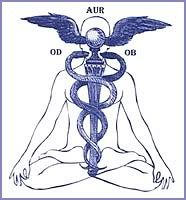

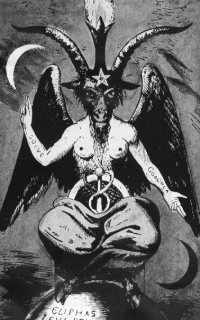
What does any of this have to do with the "suicide" at the Shacknai residence? Beyond the obvious, that anyone who belongs to elite networks of power possesses a virtual immunity from being prosecuted for crimes that would have the rest of us behind bars for a lifetime, it's hard to say. I will let the reader draw their own conclusions because anything else I could say at this point would be pure speculation. Here is part of a relevant article from CBS News.
CEO Shacknai Wields Small Army Against Speculation on Death of His Girlfriend
Medicis (MRX) CEO Jonah Shacknai’s threat to sue the lawyer representing the family of his late girlfriend, who was found bound and hanging naked from a balcony at his Coronado, Calif., home on July 13, is an attempt to do the impossible: Dampen speculation about the death.
The Shacknai family has reportedly hired two lawyers, a PR firm and a private detective since the death, which has officially been declared a suicide.
Shacknai hired a PR firm, Sitrick & Co., less than a week after Rebecca Zahau Nalepa’s death. Executives at that agency have had a series of off-the-record conversations with reporters whom the agency believes have made mistakes in their coverage.
Media coverage has changed: A source close to the case told BNET that Rebecca told her family she believed Max, Shacknai’s 6-year-old son, may have been “planking” on a stair rail before he suffered a fatal fall two days before she died. (Planking is a fad in which people photograph themselves lying face down in unusual locations.) USA Today initially published a story that included the planking reference, but that word was removed from later editions, as these images of Google’s cache of two older versions of the story show: more...
Here is the logo for Shacknai's company, Medicis Pharmaceuticals. The Medicis were a banking family and royal house that played a central role in founding an occult fraternity called Rosicrucianism, an organization that continues to exercise enormous influence on international politics up to the present day. The Medicis logo contains an image strikingly similar to the caduceus, a staff carried by the Greek god Hermes which was entwined by two snakes. Within Western occultism, Hermes is considered to be the primary teacher whose writings form the basis of modern esoteric tradition. Rosicrucianism itself is promoted as a Hermetic Order. The caduceus was originally adopted as a symbol of medicine allegedly at the insistence of Captain Frederick P. Reynolds, descendant of a lineage that occult researcher Fritz Springmeier names as one of the 13 Bloodlines of the Illuminati.
What does any of this have to do with the "suicide" at the Shacknai residence? Beyond the obvious, that anyone who belongs to elite networks of power possesses a virtual immunity from being prosecuted for crimes that would have the rest of us behind bars for a lifetime, it's hard to say. I will let the reader draw their own conclusions because anything else I could say at this point would be pure speculation. Here is part of a relevant article from CBS News.
CEO Shacknai Wields Small Army Against Speculation on Death of His Girlfriend
Medicis (MRX) CEO Jonah Shacknai’s threat to sue the lawyer representing the family of his late girlfriend, who was found bound and hanging naked from a balcony at his Coronado, Calif., home on July 13, is an attempt to do the impossible: Dampen speculation about the death.
The Shacknai family has reportedly hired two lawyers, a PR firm and a private detective since the death, which has officially been declared a suicide.
Shacknai hired a PR firm, Sitrick & Co., less than a week after Rebecca Zahau Nalepa’s death. Executives at that agency have had a series of off-the-record conversations with reporters whom the agency believes have made mistakes in their coverage.
Media coverage has changed: A source close to the case told BNET that Rebecca told her family she believed Max, Shacknai’s 6-year-old son, may have been “planking” on a stair rail before he suffered a fatal fall two days before she died. (Planking is a fad in which people photograph themselves lying face down in unusual locations.) USA Today initially published a story that included the planking reference, but that word was removed from later editions, as these images of Google’s cache of two older versions of the story show: more...
Wednesday, June 29, 2011
Occult Symbolism in Food Processing Industry Logos
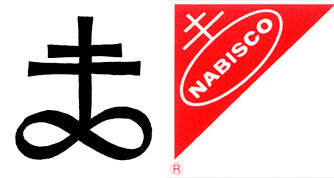
Since the subject of occult symbolism in the entertainment industry has been done to death, both here and elsewhere, I figured I would focus on something a lot less glamorous but far more fundamental to all of our day-to-day lives. What got me started on the subject was stumbling across an Abovetopsecret thread on how the Nabisco logo resembles the pontifical cross of Lucifer, a symbol that has traditionally been used for occult rituals of the Left Hand Path. The original poster pointed out that, since the circle and the infinity symbol can both be interpreted to mean eternal life, the meaning of these two images could be the same. Before you die laughing at the idea of the undoubtedly stuffy and unfashionable Nabisco CEO engaging in Luciferian rituals, remember that there really is a conspiracy to convince Americans to eat toxic garbage, and that conspiracy has everything to do with centralization of food production into the hands of a few companies whose owners most likely belong to the occult fraternities so prominent in global politics.


Agricultural centralization is a problem equally as important as anything occurring in the cultural sphere because of its potential for causing widespread famine, disease and ecological catastrophes that can destroy human habitats. To cite one example, the clearcutting of forests necessary for monocropped industrial farms mean that any violent storm systems occurring in the region will cause an exponentially greater amount of hardship for surrounding communities, since the absence of wind blocks in the form of trees allows for an unimpeded course of destruction. There are, however, ancient horticultural methods that can render these destructive and wasteful practices obsolete, as we shall soon see.

In recent centuries, industrial agriculture has relied on tilling the soil, in addition to the widespread application of chemical fertilizers, despite the fact that these measures have been scientifically proven to result in only a short term rise in soil fertility. In the long run, destruction to soil pathways through tilling leads to compaction and erosion, resulting in poor soils that cannot support the plant life we all need to thrive. Additionally, synthetic fertilizers, which only supply the bare minimum of nutrients, need to be applied in greater and greater amounts which means more profit incentive for agricultural supply cartels and less independence for small farmers. The singular focus on monocrops also means the annihilation of a complex ecosystem that has taken thousands of years to evolve. This web of life is what prevents single organisms from acquiring a monopoly on natural resources in any given bioregion.
As a consequence of this artificial reversal of biological principles, our food supply has become increasingly vulnerable to pests and diseases, since the natural checks and balances that minimize these problems, such as beneficial, predatory insects that consume agricultural pests, as well as plants guilds that fix nutrients in the soil, increasing resistance to disease, have been all but eliminated. The loss of ecological complexity has, however, reaped windfall profits for the producers of pesticides, herbicides and fungicides, in addition to those multinational food-processing conglomerates which have a vested interest in suppressing the rise of local food movements. This problem returns us to the issue of the New World Order of food production and the occult agenda of depopulation that underlies its policies.

Above are the logos of Dole, the world's largest fruit company, and Sunkist Grower's, Inc. The image of the sun is a symbol of enlightenment, another symbol for which, the Eye of Providence, is pictured on US currency. The sun's path through the Zodiac also represents the underlying mythology that unites both Abrahamic and polytheistic faiths in the esoteric fraternities of the global establishment.

Featured prominently on the General Mills Logo is a stylized "G", an important emblem in freemasonry, in part because of its association with gnosticism which is said to be the origin of the sect.

The Walmart logo contains a Hagalaz rune, which ancient Germanic cultures interpreted as a symbol of crisis, catastrophe, impersonal power and destructive elements of nature. Because Hagalaz was the ninth rune, it was considered to be an especially important one on account of the meaning of nine as perfection and completion. Hagalaz was also inscribed on the rings of Nazi SS members, enclosed by a hexagon. On a possibly related note, Sam Walton, the founder of Walmart, was a Captain who worked for Army intelligence.

Targeting Starbucks will be easy for me since they have done more than any other company to put independent coffee shops out of business, meaning that, once a year or so, I inevitably succumb to the temptation of iced green tea and end up in the maw of its awful corporate-seeming atmosphere listening to bland soft rock against my will. The Starbucks logo, along with three pentagrams, contains the image of a twin-tailed mermaid. In the ancient world, this image would have been linked to Melusine, a heraldic figure that was frequently depicted on coat of arms for the nobility. Melusine, a half-woman and half-serpent being was said to be the daughter of Godfroi de Bouillon, former king of Jerusalem and founder of both the Knights Templar and the Priory of Sion.


Returning to the Nabisco logo, one can see quite a bit of resemblance to the Cross of Lorraine, yet another heraldic figure associated with the Knights Templar, along with the Merovignians. According to the book, Holy Blood, Holy Grail, the Merovignians are one of the primary families associated with both occult fraternities and international politics.

Grupo Bimbo is one of the largest baking companies in the world. Their logo displays a hexagon, an occult symbol employed to invoke the planetary sphere of influence, as opposed to the pentagram which symbolizes the elemental or terrestrial sphere of influence. Western occultism also associates hexagrams with the planet Saturn, which astrological systems interpret as the planet of structure, technical knowledge, ambition and old age. Maybe the Bimbo product designers chose the insignia for Saturn because regular indulgence in Bimbo products induces premature aging. ;)

Along with corporate control of the food supply is the accompanying draconian legislation of regulatory agencies that seek to eliminate small farmers through layers of bureaucracy that make it nearly impossible for them to compete with large-scale agricultural enterprises. This process is accomplished through licensing fees, arbitrary bans on home production of marketable food items, government subsidies to agricultural supply companies, and outrageously high fees for organic certification. The purpose behind this legislation is to commodify the organic food movement into an easily controlled market that can be repackaged as compatible with neoliberal globalization, leaving behind the emphasis on localism and sustainability that characterized the organic foods movement from its origins. Walmart, for example, has recently jumped on the organic bandwagon, yet all the farmers they've contracted with are, due to the comparatively lower profit margins of working with small farmers, either large-scale enterprises or located in foreign countries, where workers can be more easily exploited.
Along with corporate control of the food supply is the accompanying draconian legislation of regulatory agencies that seek to eliminate small farmers through layers of bureaucracy that make it nearly impossible for them to compete with large-scale agricultural enterprises. This process is accomplished through licensing fees, arbitrary bans on home production of marketable food items, government subsidies to agricultural supply companies, and outrageously high fees for organic certification. The purpose behind this legislation is to commodify the organic food movement into an easily controlled market that can be repackaged as compatible with neoliberal globalization, leaving behind the emphasis on localism and sustainability that characterized the organic foods movement from its origins. Walmart, for example, has recently jumped on the organic bandwagon, yet all the farmers they've contracted with are, due to the comparatively lower profit margins of working with small farmers, either large-scale enterprises or located in foreign countries, where workers can be more easily exploited.
The possibility of resource descent from topsoil loss and aquifer depletion may end in widespread social inequality if collective stewardship of these resources is not pursued. Native American tribes are being labelled as terrorists because of their peaceful demonstration against shale oil extraction in their local watershed. Shale oil drilling has already resulted in poisoned water supplies and evacuation of entire neighborhoods. Despite environmental problems so severe that the Louisiana coast loses the equivalent of one football field an hour due to soil erosion, right wing conspiracy theorists have suggested that environmental destruction is a total falsehood concocted by the New World Order. While it may be true that the idea of peak oil is propaganda spread by oil companies looking to raise prices, any superficial observation of yellowed plants growing in disturbed soil by the highway reveals the immediate consequences that oxidized fossil fuels leave in their wake. As the species solely responsible for catastrophes such as last year's Gulf oil spill, we have a responsibility to the web of life which connects us to the rest of creation. Earlier cultures provided a system by which we can minimize our negative impact on the earth, through a philosophy which emphasizes the sanctity of the environment as well as its human caretakers.

Look at the garden above. On an intuitive level, isn't it more aesthetically pleasing than the endless rows of monocrops that define the modern industrial farm? In this case, your senses verify the ecological principle of complexity, which simply states that as a newly emerging ecology increases in complexity, there is also a corresponding increase in productivity. To the horticulturalist, this productivity translates to an abundant, diverse harvest. The ancient but recently-named system of permaculture aims to harness the principle of complexity through a cultivated ecology that uses diverse polycultures to closely mimic the intricately interwoven plant guilds found in nature. Mature permaculture settlements are small-scale systems composed of dense layers of forest gardens, efficiently designed housing and livestock integrated in a cohesive whole.
Permaculture philosophy also emphasizes the importance of localism, not only in food production, but also in bioregional government and economics, with limits to speculation and centralization of bureaucracy. Taken together, these principles form the basis of an environmental movement structured in such a way that it provides one of the only truly effective methods of resistance against heavily centralized global governance. Many in the patriot and truth seeker communities, recognizing the flaws in global food production systems, have focused on survivalism, stockpiling non-perishable goods and, typically, ammunition as well. Yet these avenues provide no tenable solutions for creating an improved society in which resources are more equitably distributed, meaning that impoverishment and food riots are a distinct possibility in the latter stages of the American Empire. Intensive study and practice in horticulture will demonstrate that no single family can create all the resources necessary for true self-suficiency. Scientific studies have also shown that soils vary tremendously in vitamin and mineral content from one spot to another, so relying on one small area for all your food needs is a strategy sure to lead to malnourishment, even assuming that the means to produce and maintain your own food are in place. So, true autonomy from authoritarian governments means, instead of the inherent competition and violence of unmitigated self-sufficiency, a return to small-scale systems of production backed by interdependent communities. Permaculture and all its sub-disciplines provide a way out of a grim future through an emphasis on local community and sustainability beyond the globalist paradigm.
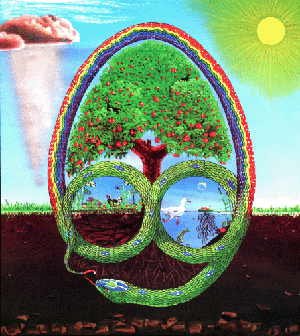
Permaculture philosophy also emphasizes the importance of localism, not only in food production, but also in bioregional government and economics, with limits to speculation and centralization of bureaucracy. Taken together, these principles form the basis of an environmental movement structured in such a way that it provides one of the only truly effective methods of resistance against heavily centralized global governance. Many in the patriot and truth seeker communities, recognizing the flaws in global food production systems, have focused on survivalism, stockpiling non-perishable goods and, typically, ammunition as well. Yet these avenues provide no tenable solutions for creating an improved society in which resources are more equitably distributed, meaning that impoverishment and food riots are a distinct possibility in the latter stages of the American Empire. Intensive study and practice in horticulture will demonstrate that no single family can create all the resources necessary for true self-suficiency. Scientific studies have also shown that soils vary tremendously in vitamin and mineral content from one spot to another, so relying on one small area for all your food needs is a strategy sure to lead to malnourishment, even assuming that the means to produce and maintain your own food are in place. So, true autonomy from authoritarian governments means, instead of the inherent competition and violence of unmitigated self-sufficiency, a return to small-scale systems of production backed by interdependent communities. Permaculture and all its sub-disciplines provide a way out of a grim future through an emphasis on local community and sustainability beyond the globalist paradigm.
Saturday, April 23, 2011
Occultism and its Relationship to New World Order Resistance
I stumbled across this documentary about Belita Adair and her role as a subject of MK Ultra experiments while browsing through black metal blogs and was instantly fascinated. I took the time to transcribe the most relevant parts because I have a hard time absorbing auditory information and wanted to return to it at a later date. So here is an extract of those parts of the documentary which pertain to the subjects covered on this blog. It was necessary to make minor grammatical corrections in a few places to clarify otherwise confusing sentence structures:
"Belita started to play classical and medieval piano compositions after being visited by a large, dark horned presence at the age of three. Soon after, she would sing and speak in ancient and modern languages in a spirit possessed trance with different voices coming through her. Belita was a psychic test subject, studied by noted parapsychologist Dr. Andrija Pujarich at the Stanfor University Paranormal Research Department and also at UCLA by Thelma Moss. In 1977, Belita was studied by Pujarich in the secret Farraday cage in Ossining, New York. While she was in a trance state, Pujarich brought Belita to a nearly lifeless state due to the lack of air in the cage. These sessions were taped by Pujarich and turned into top secret transcripts. The information Belita spoke of during her trance included Atomic numbers and Sound Wave to Atom theories and formulas. During the same year, Belita was presented by Pujarich to do private, invitation only channeling sessions in London, England. He wanted for all this to remain stealth and for Belita to remain a well hidden secret. He said there was a threat that Belita was a target of kidnapping by all the governments wanting this covert information. From the strain of the tests, Belita became very ill and lost so much weight that her condition was life-threatening. In the mid 1980s, she was diagnosed with an illness called Lupus and by February 2006 she was in a near death state with her
body rotting and blue. But somehow Belita came back to life. In the latter half of 2006, she created her musical project Satanic Corpse. Belita is a follower of the dark Left Hand Path and a Satanist."
Incidentally,many other subjects of the MK Ultra Project have discussed having been confined to Farraday cages, so this part of Belita's story can be confirmed elsewhere. The documentary brought up a few issues for me, namely the ethical/religious motivations of MK Ultra researchers, which led into a series of questions regarding the New World Order and its primarily Christian resistance movement. To begin with, it is likely that most people can agree on the basics: performing oxygen deprivation experiments on a small child is flat out wrong because of the threat of permanent brain damage and death. This should be evident to any reasonable person, although unfortunately it probably isn't for some who only see the mention of demonic possession and either laugh or think of Belita as the next Aleister Crowley with reverence and no thought to the damage inflicted on her by unscrupulous researchers. However, there is a growing number of people who realize that child abuse is, and always has been, an intrinsic part of the MK Ultra experiments in mind control and paranormal research. Where I part ways with this crowd is in the issue of occultism itself, which I think is a valid academic subject worthy of scientific research in its own right. But not for a minute would I trust the CIA or any other covert organization that has been involved in the project to conduct these experiments in en ethical way, given their history of destroying people's minds and bodies without so much as informed consent.
So although I'm extremely appreciative of the recent negative attention the MK Ultra issue has been receiving, I'm also somewhat skeptical as to the motives of said critics as well as those aspects of the project they've chosen to focus on. Most of this criticism is from a fundamentalist Christian viewpoint which objects to the use of occult symbolism, much which is derived from polytheism, which is a bit confusing to me since virtually all of Christian iconography can be traced to polytheistic cultures. I've covered this subject at length elsewhere, although scholars like Acharya S are far better versed in the subject than myself. Interested parties should refer to their research instead of my own as source material. So, to restate the basic point for those who missed earlier posts, what I take issue with is human rights abuses, not the study of occultism, which can be quite beneficial to society depending on the way it is handled. As for the issue of demonic possession, or the more commonly occurring astral parasites, I tend to believe that this is a very real phenomenon whose prevalence could be markedly reduced if occultism was less vilified by fundamentalists, since a lesser number of people would be attracted to unethical occult practitioners like Crowley if they weren't rebelling against hysterical Christian dogma in the first place. In other cases, genuinely benevolent forces may be mistaken for demons simply because their image doesn't conform to that of Judeochristian mythology.
Personally, I can't identify myself with any one religion, although neopaganism is probably the closest fit because it leaves the most room for interpretation and combination of varying traditions. However, like many people I can find much to be inspired by in particular aspects of each tradition, whether a shamanistic indigenous ceremony or a hugely centralized monotheistic religion like Christianity. Even Islam, by far the most repressive religion in the modern world, is rooted in a tradition of mysticism through the Sufism of the whirling dervishes. What unifies all of these cultures is the esoteric interpretation of symbolism found in occult studies, as well as the practical application of those ideas in occultism's trashy cousin, paranormal research. It is fascinating that traditions of Christian mysticism hold many parallels with exploration of the paranormal, including spirit possession, astral journeying, telepathy and precognition. Unfortunately, these traditions have largely been suppressed by church orthodoxy which regards submission to church hierarchy to be a precondition of revelation. What makes these issues tricky to deal with is the fact that pantheistic mysticism, including Christian esotericism, has been preserved and reinvigorated by mystery schools such as Freemasonry, groups that have a vested interest in securing geopolitical centralization. This elite version of pantheism is quite different than that of the autonomous groups and individuals who make up the vast majority of the modern neopagan movement, so it is important to differentiate between the two even though there is surely a certain amount of overlap. Failure to do so means invalidating the spiritual traditions of not only esoteric Christianity but thousands of other cultures as well, since mysticism and exploration into the paranormal is a tradition that simply cannot be owned by Freemasonry or other facets of the global power structure.

One of my first religious experiences happened while viewing the artwork in the Faeries and Gnomes books by Brian Froud. Spirituality has always been central to the way I interact with the world, which exists (in my mind anyways) not only in fundamentalist terms of good vs evil but also as a palate of infinite colors, where any and all beings intermingle and coalesce in the ether just outside the confines of our perception. Froud's faeries gave shape to this nebulous community of beings, who were both outside of my grasp enough to elude capture and accessible enough to have human flaws and desires. What made them beautiful was that I could relate to them. They were "human" and most did not demand obedience, merely requiring a mostly unnoticed coexistence.

The God of my Christian relatives, on the other hand, did demand obedience and to what end? Most of my God-fearing relatives were divorced, addicted to drugs, cheating on their spouses, abusing their children or similar. The faeries, on the other hand, promised no salvation and neither did they deny it. I liked them better than Jehovah back then and I still do today. However, there are beings in the faerie universe which closely approximate the Christian concept of angels and demons and recent experiences have brought me even closer to believing in these beings. Yet Western civilization's monotheistic paradigm has been strictly limited to cycles of cultural dominance and forcible conversion, actions that time has shown lead only to further warfare and societal degradation. Could it be that we may, in fact, have something to learn from earlier and comparatively less chaotic civilizations such as polytheistic indigenous tribes, the mythological remnants of which can be found in Froud's faeries? Make no mistake: these cultures were not perfect and many of them were outright cannibalistic. Clearly, these are not practices that any contemporary civilization would wish to emulate. Yet many other tribes managed to formulate a relatively non-hierarchical society in which resources were equitably distributed in a fashion quite foreign to the present world's democratic societies. Could Western civilization's bloody extermination of these cultures have set up a karmic cycle that relegates us to an existence of warfare and inevitable reverse colonization? Considering all the technological achievements in recent centuries, the thought is disturbing, but it also allows for a potential solution by way of restoring those cultures through respect to varied spiritual traditions, complementing and not opposing those of Abrahamic faiths. This approach may not sit well with many in the anti-New World Order crowd, who see Christian supremacy as the only solution to global governance and its accompanying One World religion.
But recent findings in the scientific community have established that the need to give respect to indigenous polytheistic cultures is one that is not exclusively metaphysical, instead being rooted in very practical concerns that affect every one of us. Foremost among these discoveries
is the knowledge that industrial farming methods have led to a loss of genetic diversity in the environments where they are practiced, meaning that people are increasingly dependent on pesticides because of the way that parasitic species can take over in an imbalanced ecology. In many places of the world, indigenous communities have an encyclopedic knowledge of their bioregion, yet pharmaceutical companies are rushing in to patent individual plants without consulting local tribes or considering the long lasting consequences of species collapse. The loss of topsoil, as well as the almost completely emptied aquifers, natural resources whose destruction would have catastrophic consequences, have also been sped along by wasteful and environmentally toxic farming practices. In recent decades, an ecologically sustainable system called permaculture has integrated knowledge from a wide variety of scientific disciplines to confirm that hundreds of different indigenous communities created intelligent designs for human settlements, designs that academically trained scientists are still learning from today. Indigenous practices of sustainable horticulture and city design have since been successfully combined with the appropriate use of technology to form resilient permaculture communities that could serve as a model for future human settlements. Beyond the scientific, many indigenous communities believed in animism, the idea that living things are imbued with spirit, and that the spirits of plants can teach the shamans of those communities about how they can be used medicinally and otherwise. Here is an amusing video by herbalist Susun Weed that clearly illustrates this point.
So how does all this information tie into New World Order resistance and MK Ultra research? Well, what it indicates is that, if social dissent against political centralization has any hope at being successful, there is a need to let go of the idea of jealous gods and religious supremacy, since fundamentalism of this variety is what would be used to justify the establishment of massively coordinated "peace keeping" forces to begin with. Additionally, techniques of indigenous permaculture can be used to avert the ecological catastrophes that would result in the reductions to standards of living recommended by the United Nations for global populations. A popular movement that values decentralized religious freedom is different than a One World religion in which religious freedom is suppressed in favor of a homogenized spirituality used to enforce the dominant paradigm. In the area of occult symbolism, typically occurring in the media, that means losing the hysteria about masks, pentagrams, enlightenment, and other facets of cultures differing from Judeochristianity. A more reasonable approach would be to focus on the values of the organizations behind these symbols, since any other approach risks alienating huge numbers of people who might otherwise be sympathetic to the agenda being criticized. For example, when the all-seeing eye is employed in the logo of Homeland Security, discussion about the surveillance state may be more effective than condemning Buddhism and the New Age movement, because many people who identify with these cultures may also see huge problems with the policies being promoted by the global establishment. Unfortunately, the term "controlled opposition" often conjures the idea of people who are willing agents of the state, perhaps paid off by intelligence agencies or other nefarious groups. But I think what happens more often is that people become unwitting collaborators with elite agendas, and their unintentionally destructive ideas are allowed to proliferate specifically because, again, those ideas reinforce the values of the dominant paradigm. So, ironically, what may be needed to counter the rise of a One World religion, as well as centralization in other areas, is respect for spiritual and cultural diversity, a respect that need not be policed by a global authority.
"Belita started to play classical and medieval piano compositions after being visited by a large, dark horned presence at the age of three. Soon after, she would sing and speak in ancient and modern languages in a spirit possessed trance with different voices coming through her. Belita was a psychic test subject, studied by noted parapsychologist Dr. Andrija Pujarich at the Stanfor University Paranormal Research Department and also at UCLA by Thelma Moss. In 1977, Belita was studied by Pujarich in the secret Farraday cage in Ossining, New York. While she was in a trance state, Pujarich brought Belita to a nearly lifeless state due to the lack of air in the cage. These sessions were taped by Pujarich and turned into top secret transcripts. The information Belita spoke of during her trance included Atomic numbers and Sound Wave to Atom theories and formulas. During the same year, Belita was presented by Pujarich to do private, invitation only channeling sessions in London, England. He wanted for all this to remain stealth and for Belita to remain a well hidden secret. He said there was a threat that Belita was a target of kidnapping by all the governments wanting this covert information. From the strain of the tests, Belita became very ill and lost so much weight that her condition was life-threatening. In the mid 1980s, she was diagnosed with an illness called Lupus and by February 2006 she was in a near death state with her
body rotting and blue. But somehow Belita came back to life. In the latter half of 2006, she created her musical project Satanic Corpse. Belita is a follower of the dark Left Hand Path and a Satanist."
Incidentally,many other subjects of the MK Ultra Project have discussed having been confined to Farraday cages, so this part of Belita's story can be confirmed elsewhere. The documentary brought up a few issues for me, namely the ethical/religious motivations of MK Ultra researchers, which led into a series of questions regarding the New World Order and its primarily Christian resistance movement. To begin with, it is likely that most people can agree on the basics: performing oxygen deprivation experiments on a small child is flat out wrong because of the threat of permanent brain damage and death. This should be evident to any reasonable person, although unfortunately it probably isn't for some who only see the mention of demonic possession and either laugh or think of Belita as the next Aleister Crowley with reverence and no thought to the damage inflicted on her by unscrupulous researchers. However, there is a growing number of people who realize that child abuse is, and always has been, an intrinsic part of the MK Ultra experiments in mind control and paranormal research. Where I part ways with this crowd is in the issue of occultism itself, which I think is a valid academic subject worthy of scientific research in its own right. But not for a minute would I trust the CIA or any other covert organization that has been involved in the project to conduct these experiments in en ethical way, given their history of destroying people's minds and bodies without so much as informed consent.
So although I'm extremely appreciative of the recent negative attention the MK Ultra issue has been receiving, I'm also somewhat skeptical as to the motives of said critics as well as those aspects of the project they've chosen to focus on. Most of this criticism is from a fundamentalist Christian viewpoint which objects to the use of occult symbolism, much which is derived from polytheism, which is a bit confusing to me since virtually all of Christian iconography can be traced to polytheistic cultures. I've covered this subject at length elsewhere, although scholars like Acharya S are far better versed in the subject than myself. Interested parties should refer to their research instead of my own as source material. So, to restate the basic point for those who missed earlier posts, what I take issue with is human rights abuses, not the study of occultism, which can be quite beneficial to society depending on the way it is handled. As for the issue of demonic possession, or the more commonly occurring astral parasites, I tend to believe that this is a very real phenomenon whose prevalence could be markedly reduced if occultism was less vilified by fundamentalists, since a lesser number of people would be attracted to unethical occult practitioners like Crowley if they weren't rebelling against hysterical Christian dogma in the first place. In other cases, genuinely benevolent forces may be mistaken for demons simply because their image doesn't conform to that of Judeochristian mythology.
Personally, I can't identify myself with any one religion, although neopaganism is probably the closest fit because it leaves the most room for interpretation and combination of varying traditions. However, like many people I can find much to be inspired by in particular aspects of each tradition, whether a shamanistic indigenous ceremony or a hugely centralized monotheistic religion like Christianity. Even Islam, by far the most repressive religion in the modern world, is rooted in a tradition of mysticism through the Sufism of the whirling dervishes. What unifies all of these cultures is the esoteric interpretation of symbolism found in occult studies, as well as the practical application of those ideas in occultism's trashy cousin, paranormal research. It is fascinating that traditions of Christian mysticism hold many parallels with exploration of the paranormal, including spirit possession, astral journeying, telepathy and precognition. Unfortunately, these traditions have largely been suppressed by church orthodoxy which regards submission to church hierarchy to be a precondition of revelation. What makes these issues tricky to deal with is the fact that pantheistic mysticism, including Christian esotericism, has been preserved and reinvigorated by mystery schools such as Freemasonry, groups that have a vested interest in securing geopolitical centralization. This elite version of pantheism is quite different than that of the autonomous groups and individuals who make up the vast majority of the modern neopagan movement, so it is important to differentiate between the two even though there is surely a certain amount of overlap. Failure to do so means invalidating the spiritual traditions of not only esoteric Christianity but thousands of other cultures as well, since mysticism and exploration into the paranormal is a tradition that simply cannot be owned by Freemasonry or other facets of the global power structure.
One of my first religious experiences happened while viewing the artwork in the Faeries and Gnomes books by Brian Froud. Spirituality has always been central to the way I interact with the world, which exists (in my mind anyways) not only in fundamentalist terms of good vs evil but also as a palate of infinite colors, where any and all beings intermingle and coalesce in the ether just outside the confines of our perception. Froud's faeries gave shape to this nebulous community of beings, who were both outside of my grasp enough to elude capture and accessible enough to have human flaws and desires. What made them beautiful was that I could relate to them. They were "human" and most did not demand obedience, merely requiring a mostly unnoticed coexistence.
The God of my Christian relatives, on the other hand, did demand obedience and to what end? Most of my God-fearing relatives were divorced, addicted to drugs, cheating on their spouses, abusing their children or similar. The faeries, on the other hand, promised no salvation and neither did they deny it. I liked them better than Jehovah back then and I still do today. However, there are beings in the faerie universe which closely approximate the Christian concept of angels and demons and recent experiences have brought me even closer to believing in these beings. Yet Western civilization's monotheistic paradigm has been strictly limited to cycles of cultural dominance and forcible conversion, actions that time has shown lead only to further warfare and societal degradation. Could it be that we may, in fact, have something to learn from earlier and comparatively less chaotic civilizations such as polytheistic indigenous tribes, the mythological remnants of which can be found in Froud's faeries? Make no mistake: these cultures were not perfect and many of them were outright cannibalistic. Clearly, these are not practices that any contemporary civilization would wish to emulate. Yet many other tribes managed to formulate a relatively non-hierarchical society in which resources were equitably distributed in a fashion quite foreign to the present world's democratic societies. Could Western civilization's bloody extermination of these cultures have set up a karmic cycle that relegates us to an existence of warfare and inevitable reverse colonization? Considering all the technological achievements in recent centuries, the thought is disturbing, but it also allows for a potential solution by way of restoring those cultures through respect to varied spiritual traditions, complementing and not opposing those of Abrahamic faiths. This approach may not sit well with many in the anti-New World Order crowd, who see Christian supremacy as the only solution to global governance and its accompanying One World religion.
But recent findings in the scientific community have established that the need to give respect to indigenous polytheistic cultures is one that is not exclusively metaphysical, instead being rooted in very practical concerns that affect every one of us. Foremost among these discoveries
is the knowledge that industrial farming methods have led to a loss of genetic diversity in the environments where they are practiced, meaning that people are increasingly dependent on pesticides because of the way that parasitic species can take over in an imbalanced ecology. In many places of the world, indigenous communities have an encyclopedic knowledge of their bioregion, yet pharmaceutical companies are rushing in to patent individual plants without consulting local tribes or considering the long lasting consequences of species collapse. The loss of topsoil, as well as the almost completely emptied aquifers, natural resources whose destruction would have catastrophic consequences, have also been sped along by wasteful and environmentally toxic farming practices. In recent decades, an ecologically sustainable system called permaculture has integrated knowledge from a wide variety of scientific disciplines to confirm that hundreds of different indigenous communities created intelligent designs for human settlements, designs that academically trained scientists are still learning from today. Indigenous practices of sustainable horticulture and city design have since been successfully combined with the appropriate use of technology to form resilient permaculture communities that could serve as a model for future human settlements. Beyond the scientific, many indigenous communities believed in animism, the idea that living things are imbued with spirit, and that the spirits of plants can teach the shamans of those communities about how they can be used medicinally and otherwise. Here is an amusing video by herbalist Susun Weed that clearly illustrates this point.
So how does all this information tie into New World Order resistance and MK Ultra research? Well, what it indicates is that, if social dissent against political centralization has any hope at being successful, there is a need to let go of the idea of jealous gods and religious supremacy, since fundamentalism of this variety is what would be used to justify the establishment of massively coordinated "peace keeping" forces to begin with. Additionally, techniques of indigenous permaculture can be used to avert the ecological catastrophes that would result in the reductions to standards of living recommended by the United Nations for global populations. A popular movement that values decentralized religious freedom is different than a One World religion in which religious freedom is suppressed in favor of a homogenized spirituality used to enforce the dominant paradigm. In the area of occult symbolism, typically occurring in the media, that means losing the hysteria about masks, pentagrams, enlightenment, and other facets of cultures differing from Judeochristianity. A more reasonable approach would be to focus on the values of the organizations behind these symbols, since any other approach risks alienating huge numbers of people who might otherwise be sympathetic to the agenda being criticized. For example, when the all-seeing eye is employed in the logo of Homeland Security, discussion about the surveillance state may be more effective than condemning Buddhism and the New Age movement, because many people who identify with these cultures may also see huge problems with the policies being promoted by the global establishment. Unfortunately, the term "controlled opposition" often conjures the idea of people who are willing agents of the state, perhaps paid off by intelligence agencies or other nefarious groups. But I think what happens more often is that people become unwitting collaborators with elite agendas, and their unintentionally destructive ideas are allowed to proliferate specifically because, again, those ideas reinforce the values of the dominant paradigm. So, ironically, what may be needed to counter the rise of a One World religion, as well as centralization in other areas, is respect for spiritual and cultural diversity, a respect that need not be policed by a global authority.
Monday, December 20, 2010
How Secret Societies use Astrotheology for Mass Mind Control
For as long as people have been organized under a centralized government, the personal lives of populations have been molded by the dictates of national and religious elites whose authority is replicated in miniaturized form within family structures. Despite this predictable pattern, large segments of the alternative media have identified the coordinated destruction of nations, religions and the family as the final game plan of the global "power elite", while ignoring how these same institutions have enabled social inequality far eclipsing all but the furthest extremes of political injustice found in the modern era. The cultural upheaval of the 60s, a favorite target of right-leaning conspiracy theorists, has been recognized for its emphasis on values such as social equality, civil rights and ecological sustainability, all of which are vital elements in any democratic society. However, there is a shadow side to its origins that has not been explored except by social conservatives whose underlying political agendas often fall in line with the neo-colonial plotting of corporate-military globalists.
Contrary to the story told by major media outlets, a significant component of modern cultural change was set into place by social scientists who received grants to engineer human consciousness through media experiments, as well as other forms of behavioral conditioning. In Eros and Magic in the Renaissance, the Romanian historian Ioan Coulianu traces the origins of modern state propaganda models to techniques utilized by Renaissance occultists, who saw desire as the universal common denominator capable of subliminally inducing mass hypnosis via the collective mind of entire nations. Coulianu credited the Rosicrucian Giordano Bruno for the development of proto-crowd control techniques that would later surface in the sphere of social sciences as public relations, market research, disinformation and espionage. Bruno believed that society could always be divided into its essential components, manipulator and manipulated, and it was the role of the occultist, who would later become the scientist, to enchain the spirit of the common people through the window of their imagination, more commonly recognized as the libido. Bruno envisioned these chains as “phantasms” capable of affecting and influencing human consciousness and, by extension, social behavior. The ultimate purpose of Bruno's phantasms was to replace the external coercion of the state with internal compulsion, thus creating a self-regulating system of government.
This paradigm can easily describe the guilt-driven compulsions underlying the belief systems of the religious right, just as it can the more permissive society of Alduous Huxley's Brave New World. Setting aside political differences, there is an extensive documented history of secret societies such as the Freemasons employing occult symbolism through corporate marketing campaigns. While the alternative media typically focuses on hidden symbolism in the entertainment industry, there remains a widespread lack of discussion around the presence of occult symbolism in the logos of military contractors, agricultural companies and fossil fuel industries. What this coded media language amounts to is an avenue of social control for a shadow government comprised of elite fraternities attempting to bypass the democratic process through covert organizations. On either end of the political spectrum, the influence of fraternal orders rooted in ancient mystery cults can be discerned with careful observation.
Many mystery cults were composed of mystics who worked to provide a framework for enlightenment, a method to reach the divine through acts of mutual aid and service to others. Simultaneously, there were those within these schools for whom spiritual mastery was not a practice for managing the harmful qualities of the self, but instead a means by which to control the populace and create a class of subjugated people. Within these latter groups can be found the centuries old tradition of organized ritual abuse, whose existence is still disputed by the legal system in part because the phenomenon has been simplified as being primarily “satanic” in nature. Sophisticated mind control techniques are typically based around organized child abuse, where the developing mind of the child is shaped according to a combination of advanced scientific and occult principles. The science of trauma-based mind control is essentially an esoteric tradition, with widespread social control measures functioning as the exoteric expression of its ideas. In every case, fear-based conditioning is the basis of manipulation, whether those techniques are applied to individuals in a cult setting or to society as a whole.
The word "occultism" has traditionally been understood to convey practices such as astrology, divination, alchemy and spell-casting. The actual definition is a lot more complex, translating from the Latin word, occultus, to mean “knowledge of the hidden”. This definition contrasts occultism with the scientific method which can be defined as “knowledge of the measurable”. The Latin translation necessarily extends esotericism into the realm of Judeo-Christianity as well as indigenous cultures which, on the surface, have no commonalities with Western magical traditions. In truth, Western occultism was heavily influenced, and even shaped, by both monotheistic and polytheistic spiritual faiths. From its early origins in Hermeticism, occultism has drawn heavily from the field of what would come to be known as comparative religion, assimilating varied traditions into a methodology similar to what many contemporary occult practitioners describe as shamanism.
Because intensive study of non-Christian faiths was, during the early beginnings of the history of occult practice, considered to be potential evidence of impiety, religious institutions governed education and attempted to prevent the “heresy” of polytheistic faith. As a result, blanket condemnation of occultism carries with it the strong likelihood of racism even while many occultists have themselves been complicit in imperialism and cultural appropriation. As the history of occult orders is closely related to that of empires based on the practice of parasitizing the labor and psyche of their citizens, the details that follow are, in several passages, quite violent and difficult to absorb. Thankfully these more unpleasant aspects of esoteric history have been balanced by the traditions of organizations that strive towards the creation of communities based around principles of social justice, while not limiting the process of enlightenment to a chosen few.
No history of the rise of religious elites, along with the mystery schools and fertility cults that formed around them, is complete without a basic understanding of how these societies were shaped by their surrounding ecosystem. Prehisorical indigenous cultures utilized sacred symbolism as a method to communicate with and appease spirits of nature. In contrast with later societal uses of symbolism, which were often divorced from their immediate meaning and form, indigenous cultures understood symbols as living embodiments of the unseen forces that shape the material world. Indigenous horticultural societies developed elaborate systems of forest gardening that preserved the biodiversity of surrounding riparian habitats, thus ensuring the continued existence and sustenance of their communities. Horticultural societies are typically perceived as a temporary development bridging the gap between hunter-gatherer cultures and agricultural societies even though many of them, such as the Native American Hopewell cultures, persisted for close to a millenium. While romanticized accounts of indigenous egalitarian utopias can be discounted as ahistorical fiction, the archaeological record does convey societal histories with far less social inequality than is characteristic of agricultural societies.
Historians have recognized that agriculture led to the rise of religious authorities because the availability of grain storage meant that power could be concentrated in the hands of whoever controlled the food supply, in contrast to earlier societies which relied upon perishable food. This oversimplified account of environmental history does not take into account the inevitable precarity of agricultural societies, whose very existence is based upon the degradation of their surrounding ecosystem, leading in turn to conditions that result in violent conflict for the control of natural resources. This process begins with the deforestation needed to clear way for agricultural fields, which over time suffer from soil salting and a loss of soil fertility, after which settlements are abandoned. In the Middle East, an area of the world once known as the “fertile crescent”, this loss of soil fertility has transformed the entire region into a desert unfit for sustaining human life. In other words, the mythology of “swords to plowshares” is an impossibility, because widespread tilling of the soil always results in a chain of events leading to famine, social stratification and violent conflict. These catastrophes of nature are then reflected in religious symbolism, in which seasonal procession is viewed as an inherently violent cycle governed by malevolent nature deities whose wrath must be appeased by the shedding of human blood. Therefore, any history of social inequality should be placed in a greater context of disruption of the ecological web of life, whereby the death of entire ecosystems through agricultural tilling results in a chain of events leading to warfare and human sacrifice.
The occult theocracies of Mesopotamia were the first centralized institutions to design tactics of mass social manipulation through ecstatic celebration. Although some well-intentioned neo-pagan authors have attempted to formulate visions of Mesopotamian empires as havens for individual rights, particularly the rights of women, the principles of the Babylonian law code tell quite a different story. The ruling classes of Mesopotamian nation-states effectively devised a prototype for the modern totalitarian state through near total control of social behavior. For example, Babylonian law states that a woman who was convicted of adultery would be stoned to death, a practice that continues in many Islamic countries to this day. Yet the religious ritual that united the majority of Mesopotamian cultures was a sex rite symbolizing the sacred marriage of the king with a fertility goddess, variously represented as Inanna, Astarte and Ishtar, among others names. The Greek historian Herodotus claimed that all Babylonian women were bound by law to sexually perform for strangers. Far from being an unrestrained celebration, sacred marriage rituals were strictly regulated and designed to reinforce the authority of the king over his citizens. The philosophy underlying Mesopotamian fertility rites was the divine right of kings, a concept that would later justify the establishment of feudal aristocracies throughout Medieval Europe.
Like the Mesopotamian empires, Ancient Egypt was a theocracy supported by the subjugation of the lower classes whose agricultural labor enabled the comfortable lifestyle of the priests. Egyptians did not consider sexuality to be a taboo subject, as their mythology contained stories of adultery, masturbation, incest and same sex relationships. For the royal family, incest was seen as a holy act because it perpetuated the bloodline of the gods. One of the most vicious traditions that originated in Ancient Egypt was genital cutting, a ritual that was carried out as a devotional sacrifice to the Gods. In the present era, female genital mutilation is a pervasive problem that has caused chronic health problems in countless women, even leading to fetal death during childbirth due to blockage of the birth canal. Circumcision was exported from Egypt during the exodus of the Hebrews into Israel, along with the monotheism practiced by the hermaphroditic Pharaoh Akhenatan.
The Hebrew patriarchs devised the foundation of Abrahamic religions when they wrote the the Old Testament, in which Moses praises the necessity of strictly regimented social hierarchies similar to those of Mesopotamian nation-states. The Pentateuch explicitly outlines how God commands genocide, slavery and the mass rape of children as a way of solidifying Hebrew supremacy in Israel. In Numbers 31:17-18 God tells the Israelite soldiers “Now therefore kill every male among the little ones and kill every woman that hath known man by lying with him. But all the women children that have not known man by lying with him, keep alive for yourselves.” In ancient Israel the arranged marriage of child brides was seen as a way to ensure paternity as well as the continuity of the Abrahamic bloodlines. Wives were also required to obey their husbands as part of Mosaic law.
The Christian practice of administering sacraments can be traced to Greco-Roman mystery cults such as the festival of Attis, where an effigy representing the god was hung from a tree as a form of ritual sacrifice. March 24th was known as the Day of Blood and on this day a priest representing Attis drew blood from his arm and offered it to the gods. On the 25th the resurrection of Attis was celebrated with a sacramental meal, after which cult initiates were baptized in blood and they were said to be “born again”. The cult celebrations of Attis evoke the following passage from Deuteronomy 12:27: “And thou shalt offer thy burnt offerings, the flesh and the blood, upon the altar of the Lord thy God, and thou shalt eat the flesh.” Greco-Roman mystery cults preceded the modern degree system of Freemasonry, with secretive cult initiations based on mystical theology. The violence of many of these initiations functioned as a code of instructions for an imperial warrior ethos that was enacted by adult men coercing boys and forcing slaves into a passive sexual role in order to condition them into accepting virtues of cruelty and unchecked aggression. These values were then absorbed by young soldiers who would apply what they learned in the subjugation of foreign peoples.
Running counter to the autocratic ideals of Rome were the Dionysian mystery cults, a decentralized religion that involved the induction of trance through music, spirit possession and intoxicants. The cults provided a gathering place for social dissidents including slaves, women and foreigners who were assigned positions of respect atypical of their role in greater Roman and Greek society. The mystery cults of Dionysus have been interpreted as an affirmation and mastery over humanity's primal nature which could then be reintegrated into civilized life. Although Dionysus was later absorbed into the Olympic pantheon, historians have come to a general consensus that the mystery cults were an indigenous tradition predating Greek civilization. The cults may have also been linked to the Dionysian artificers, an esoteric sect that incorporated aspects of sacred geometry into the construction of public buildings, which could then be used to feed impoverished people. Roman authorities outlawed the mystery cults, whose non-hierarchical structure they saw as a threat to the political status quo. The cult's central role in resistance against Roman tyranny was made apparent when the wife of Spartacus, who led a slave revolt against the Republic, was announced to have been a cult initiate who considered her husband to be an incarnation of Dionysus. As a final strategy, the Roman oligarchs decided to infiltrate the cults, which were then reformulated into a hierarchical structure and assimilated into the Roman state as the Bacchanalia. It may have been during this latter incarnation of the cult's evolution that stories of ritual violence, including murder, made their way to the floors of the Roman Senate.
Another decentralized religion that rose in opposition to the Roman aristocracy was the earliest phase of Christianity, which may be more accurately described as Gnosticism. The militant pacifism of the symbolic archetype of Jesus exists in striking contrast to both the imperialistic virtues of Rome and the genocidal mandates of Jehovah. These ideas should not be interpreted as a passive acquiescence to injustice but instead as an act of moral force, whereby those who had been compelled to obedience through a societal paradigm which recognized strength as the only law took on a new role by leading and transforming the nature of their communities. Some of the first Gnostics were female priests who led congregations in private homes, a practice that directly opposed the values of Roman society which saw women as primarily breeding stock. In Mathew 5:9, Jesus said “Blessed are the peacemakers, for they shall be called sons of God.” Taken from the the context of a time period defined by war, slavery and gross social injustice, this statement is profoundly transgressive in a sense that is difficult to appreciate coming from the perspective of a modern person living in a democratic society. Where "survival of the fittest" is the law, women and children will necessarily take on a subordinate role sheerly by virtue of their lesser physical strength alone. This principle also applies to indigenous communities which obviously have not had the military strength to defend themselves against centralized nation-states even when unavoidably necessary attempts at self defense have been made. Unfortunately the philosophy of the early Christians that "the meek will inherit the earth" was later horribly corrupted as the Roman Catholic Church went on to murder and enslave countless numbers of indigenous communities while enshrining social inequity as the mandate of God himself.
There has been endless academic debate about whether Jesus was a truly historical figure or a representation of the teachings of a much larger number of priests and mystics. Scholars are in unanimous agreement that the Gospels were written during the time of Gnosticism, the decentralized spiritual movement that believed the God of the Old Testament to be a malevolent being who created our world as a fallen universe separated from the Divine. Many Gnostic texts, especially the Gospel of Thomas, emphasize the idea that the light of Christ is accessible to everyone without the intervention of a priestly hierarchy, including polytheists and other supposed heretics. Religious worship frequently took place in private homes instead of churches. Gnostic beliefs regarding human sexuality varied greatly, from those of the Ophites, who invoked the serpent of Genesis as a symbol of forbidden knowledge through orgiastic celebrations, to dualistic views about the ultimate incompatibility of spirit and the body. Dualism was later embraced by the Roman Catholic Church, which also outlawed the ordination of female priests while branding Gnosticism a punishable heresy.
The establishment of Christianity as the central faith of Rome can be seen as a way to commodify divergent forms of spirituality that had the potential to undermine the powers of the state. In order to achieve religious centralization, the clergy appropriated elements of polytheistic iconography and essentially preserved the hierarchical cults of antiquity through the Church. Evidence for the influence of pagan religions on Catholicism is displayed in the architecture of Gothic cathedrals whose rose windows, supposedly representative of the Virgin Mary, are actually an ancient symbol for the Egyptian Isis, wife of the solar deity Osiris. The mythology of Isis is permeated with stories of miraculous pregnancies and she is also traditionally depicted wearing a cloak of stars, the same as the Virgin Mary. Osiris was one of many solar deities whose mythology represented the cyclical path of the sun as it symbolically died during the winter solstice and was born anew as a young child. Ancient pagans saw the sun gods as a personification of the life-giving force and their resurrection was often celebrated during the spring solstice through sex rites intended to ensure agricultural bounty.
Gothic cathedrals were built by early guilds of stone masons, who utilized their knowledge of sacred geometry to construct the churches in the image of the human body. The spires, obelisks and steeples represent pagan phallic worship with the church domes and entrances mirroring the receptive female. The rays of the sun, as they penetrate the rose windows, symbolize the moment of conception. Roses were also a symbol of the worship of Venus, a Roman goddess associated with love and fertility. The Greek virgin goddess Astraea was an additional inspiration for the Virgin Mary. Astraea's festivals were celebrated during August, the same time as the Catholic feast of the Assumption, signifying the day when the Virgin Mary went to heaven. The phallic reverence of the Roman empire is preserved in St. Peter' Square at the Vatican, where an obelisk was placed after being shipped from Egypt by the Roman emperor Caligula. Stories of solar deities like Dionysus were suppressed by the Church and later reconfigured into the mythology of Christ. Dionysus, whose birthday was celebrated during the winter solstice, was invoked during festivals where his body was symbolically eaten as bread. The Persian god Mithra, also born of a virgin, was known to have performed exorcisms and cured the sick. The Phyrgian deity Attis, born of the virgin Nana, died and was resurrected with his flesh symbolically consumed as bread by worshipers. All of the various solar deities were combined in the Roman festival of Saturnalia, which was celebrated during the winter solstice.
Orthodox Christianity basically outlawed goddess worship while demoting female deities to the status of a mortal human whose role was primarily reproductive. Yet aspects of the Gnostic veneration for feminine archetypes reemerged several centuries later in a heretical Christian sect called the Cathars. The Cathars rejected Catholic deference to hierarchy while preaching that all men and women were equal. They believed that hell was reincarnation in the material world which had been created by the fallen god Jehovah. The Cathars were also devoted to universalism, a system of faith founded on the idea that all religions offer a pathway to heaven, the ultimate destination of all souls. The inner core of the Cathars were celibate, although this practice was not compulsory for all members. The sect preached that non-procreative sex was less morally problematic than the procreative variety, a teaching that led to them being labeled as sodomites in opposition to the biblical mandate of “be fruitful and multiply”. Catholic doctrine maintains that procreation is the primary purpose of marriage while minimizing the potential for marriage to create a spiritually transcendent experience. Ethical questions about procreation must be analyzed from the context of the Medieval time period, during which one in five women died during child birth and approximately half of all newborns never lived past their first year. Many contemporary historians have discovered through the Malleus Malifecarum (Hammer of Evildoers) as well as other medieval documents, that herbal practitioners, particularly midwives, were a special focus of the Inquisition. Medieval herbalists were likely familiar with the plant commonly known as Queen Anne's Lace, an emmenagogue (menstrual promoter) that has been used for centuries to prevent implantation of the fertilized egg in the uterine lining. Several different modern herbalists have conducted studies concluding that Queen Anne's Lace prevents pregnancy at a rate very close to 100% without the toxic side effects of synthetic estrogens or the waiting period necessary for surgical abortions. Compared to the modern abortion and birth control industry, medieval herbalists had formulated a medical practice that was, in numerous ways, superior. There are many situations, even factoring in medical advances of recent decades, where the scientific record has shown that continuing a pregnancy endangers the life of the mother. During medieval times, when women's access to effective, sanitary health care was minimal at best, the suppression of vitally useful information about herbal contraception undoubtedly led to an exponentially greater number of deaths for both mothers and their babies. When this information is taken into consideration, it stands to reason that Catholic dogma promoting procreation as a moral necessity ironically displays a callous disregard for human life.
Papal intolerance of divergent viewpoints continued into the Albigensian Crusade, when the Cathar stronghold of Languedoc was invaded on orders of Pope Eugene III. Many thousands of Cathars were slaughtered even though their only provocation against the church had been strictly philosophical. The Church's predilection for genocide extended well into the 16th century with the Spanish Inquisition, an event that can effectilvely be interpreted as a continuation of polytheistic blood sacrifice rituals. Another sect that has received much attention from both historians and the media is the Knights Templar, an organization that was in many ways the polar opposite of the Cathars. While the Cathars lived in voluntary poverty and tolerated other religions, the Templars amassed enormous fortunes and pillaged Muslim-controlled territories. A disproportionate amount of the media spotlight directed at the Templars concerns allegations of the fraternity engaging in violent sex rites where demonic idols were anointed with the fat of unbaptized babies. Most historians maintain that these accusations are inventions of the Church and, as a result, the Templars have come to be romanticized as martyrs of Christian persecution. In truth, the fraternity's inception was funded entirely by the Church and their extensive properties became the storehouses for Roman Catholic finances. The lurid details of ritualized orgies have since obscured the political ramifications of Templar banking, which was so widespread as to effectively set a precedent for the present day financial conglomerate. The Templars were organized in ways nearly identical to a modern corporation, even possessing a legal exemption to the Christian prohibition against money lending. In time, the Templars became so powerful that they accumulated numerous castles and estates, while managing much, if not most, of Europe's capital through the fledgling system of fractional reserve banking. Fractional reserve banking is a practice that allows banks to loan astronomical sums based on a tiny fraction of tangible assets. This new system enabled small networks of bankers to collectively engineer economic collapses by calling in all debts at the same time, thus drastically reducing the amount of currency in circulation. Today, engineered collapses are coordinated by inside traders who declare bankruptcy after transferring the funds of their customers to offshore accounts that function as tax havens. Financial practices engineered by the Templars made it possible for Church authorities and feudal landowners to amass wealth in a way that had not been possible in previous eras. So the fraternity did a great deal to increase already vast disparities in wealth and social status, directly leading to a dramatic reduction in living standards for the majority of Europe's population.
The historical record indicates a strong possibility that, after the Templars were officially disbanded on orders of King Philip, many of their members went underground and resurfaced in other esoteric fraternities throughout Europe, such as the Knights Hospitallers, The Order of the Garter, the Knights of Malta and the Rosicrucians. The Rosicrucians were an anonymous brotherhood who claimed to be devoted to reviving the arts and sciences of classical civilizations. The fraternity's impact on the cultural ethos of their time period was so significant that the award-winning scholar Frances Yates argued that both the Renaissance and the Enlightenment originated in Rosicrucian philosophy. While undoubtedly many within the organization were genuinely working for the stated Rosicrucian goals of providing free education and health care, other, more influential members maneuvered to create an elite brotherhood to rule over the commoners.
The Rosicrucian occultist John Dee, consultant and astrologer of Queen Elizabeth I, even coined the term “British Empire” while using his expertise in navigation to train European explorers who would go on to colonize and enslave Native Americans, among other “uncivilized” peoples. The Confesio Fraternitas is one of two doctrines widely regarded to have been written by founding members of the Rosicrucians and it contains the following quote, perfectly summarizing the contempt with which the author, and in all probability many other highly-placed members within the sect, regarded the common people: “A thousand times the unworthy may clamour, a thousand times may present themselves, yet God hath commanded our ears that they should hear none of them, and hath so compassed us about with His clouds that unto us, His servants, no violence can be done.”
Some of the most blatant examples of Rosicrucian-inspired occult symbolism can be found in the portraiture of Queen Elizabeth. In the Rainbow Portrait, she is portrayed draped in a cloak decorated with dozens of eyes and ears, a statement that seems to imply the nearly metaphysical supremacy of Elizabethan England. This analysis becomes reasonable in light of the fact that her court was the wellspring of the Secret Service, with Dee playing a prominent role in its genesis. The portrait is named after a rainbow that Elizabeth clutches in her right hand, an image that a variety of world cultures have interpreted as the mystic’s bridge between earth and the celestial realm. Additionally, Hinduism assigns a chakra to every color of the rainbow, possibly indicating an intellectual or spiritual influence of Dee's, who was known to dabble in the yogic tradition. This hypothesis is further reinforced by the coiled snake on Elizabeth’s cloak, since the serpent has traditionally been viewed as an allusion to the path of illumination through the rising of the kundalini force.
The court of the Medicis is considered by many researchers, including Yates, to have been a converging point for Rosicrucians, and the family itself is rumored to have contained grand masters of the esoteric Priory of Sion fraternity. The Medicis commissioned countless works of art containing occult themes, including Bronzino’s Allegory of Venus, a painting adorned with fertility symbols such as roses, a snakeskin and a beehive. The Allegory of Venus is one of many paintings of the Renaissance that can be seen as a reenactment of Roman bacchanalia. Of the Bacchanalia, Roman historian Thomas Madden writes “…there was no crime, no deed of shame, wanting. More uncleanness was committed by men with men than with women. Whoever would not submit to defilement, or shrank from violating others, was sacrificed as a victim.” Viewed in this context, the golden apple of Venus most likely represents a fall from Christian standards of purity. The dove in the lower left hand corner has also been associated with the Egyptian goddess Semiramis and then with Isis at a later point. The mask in the lower right hand corner also points towards the painting being a depiction of a mascherate (masque), a masked ball that combines poetry and musical performance. The mascherate had been perfected and performed by Lorenzo de Medici, who wrote the majority of the poetry for the masques which happened in his lifetime. It is abundantly clear that Lorenzo modeled these occasions after Roman bacchanalia, since he decorated the theater in which the masques took place with not only a replication of Roman triumphal cars and arches, but also their trophies, sculptures and ornamentation. Usage of the masks within the mascherate was another appropriation of polytheistic cultures, since the mask has a long history of being worn during pagan ceremonies in order to achieve a dissociative state through dance and chanting. The spirits of animals were believed to possess the wearers as they danced. Masks have also been used in conjunction with masonic initiation ceremonies where the initiate is masked before undergoing a symbolic death and rebirth.
It is notable that Machiavelli once remarked that the masques were merely a way for autocratic rulers to quell dissent among the populace. A nearly identical concept in the Roman world would have been the distraction of the masses by bread and circuses, which were made available to all citizens in order to prevent rioting. The Roman bacchanalia have historically been associated with political crimes and conspiracies, suggesting that the “debaucherous” activities contained within were at least in part a ruse by which political elites could elicit the secrets of those who they wished to direct into a desired course of action. Present day incarnations of this pattern can be seen in the Cremation of Care ceremonies at the elite Bohemian Grove, where a wooden effigy is ritually burned in front of a a circle of chanting revelers wearing white robes. On the surface, the Grove is a summer camp for the nation’s elite, with a guest roster that has listed Bush Sr. and Jr., Ronald Reagan, Henry Kissinger and Arnold Schwarzenegger. Predictably, the site has been linked to personal scandals ranging from crossdressing to child prostitution and murder.
The presence of ritualized androgyny at the Grove may be yet another occult influence since, for the Rosicrucians, androgyny was a way to reach the divine through the unification of polar opposites in harmonious perfection. Rosicrucian ideas about the transformative nature of androgyny may very well have originated with the accounts of European colonists, since literally hundreds of indigenous cultures throughout North and South America have placed gender deviant tribal members in a shamanic role within their respective cultures. Yet mystical androgyny took shape in a very different way in the highly codified world of European high society, because it was placed into a greater context of social inequity instead of relatively democratic culture as had been the case with indigenous cultures. An alchemical text from the 17th century, Philosophia Reformata, contains a drawing of a crowned man and woman turned towards one another in bed, alongside two soaring ravens and two images of the sun. The description says that the royal brother and sister are purified by fire, after which they are “united” and cleansed of corruption by the dew of heaven. A subsequent drawing depicts the siblings emerging from a grave as a hermaphrodite underneath the storm of a rain cloud. It may be that the text's not-so-subtle reference to incest is an acknowledgement of the European resurrection of Egyptian traditions perpetuating the divine bloodlines of the royal family through intermarriage.
According to a countless number of inside sources, nearly all the campers at the Bohemian Grove belong to occult fraternities descended from the Templars and Rosicrucians. The camp's name itself is likely derived from the occult history of the kingdom Bohemia, which, particularly during the reign of Frederick V was regarded as a center for Rosicrucian activities and research. It is probable that the cyclical nature of the personal scandals of political elites are attributable not only to the banalities of human nature, but also to the covert machinations of occult fraternities, where ill-favored initiates are ousted from the cult either by taking the blame for activities of the group or, more ominously, by unexplainable disappearance. It is known that the first four sonnets of Lorenzo de Medici’s Comento were dedicated to a woman named Simonetta, who appears in the masque as Venus. This fact is significant because Simonetta died at the age of 23 on April 26, in the brief window of energetic potency that occult practitioners believe surrounds the pagan holiday of Beltane. Exactly two years later to the day, Lorenzo’s brother Giuliano was assassinated by the papacy, begging the question of whether their deaths were yet another facet of the revived Bacchanalia.
The French Revolution, next in the line of major historical events impacted by occult fraternities, is marked by the abolishment of feudalism and a transition away from absolutist monarchies towards constitutionalist states and republics, which have since become the dominant forms of government in the modern world. All of these political accomplishments originated in grass roots peasant uprisings that were then later attributed almost entirely to middle class intellectuals whose ranks were composed of many members of esoteric organizations such as the Rosicrucians and the Freemasons. As with the Rosicrucians before them, many Freemasons exhibited genuine revolutionary sentiment, however, many members who came from the aristocracy primarily continued to view peasants as a source of expendable, cheap labor. During the time of the revolution, Edinburgh philosophy professor John Robison attended meetings of the sect only to later report that the true aim of Freemasonry was to subvert revolutionary uprisings in order to establish international hegemony on behalf of the ruling classes. In successive centuries, the elite families tied to Freemasonry would play a crucial role in the expansion of the British Empire, a series of military conquests that left Native populations devastated by mass famine and poverty due to war, slavery and ruthless taxation by the British. In Treason in America, Anton Chaitkin meticulously documents how the British East India company established Masonic lodges in China to enable the unimpeded importation of opium, an act that ended in addiction for tens of millions of Chinese peasants.
The social stratification represented by the degree system of Freemasonry is a logical extension of natural law, the Catholic ideology by which rigidly maintained social hierarchy was deemed a necessary component of any holy society. The Eye of Providence, colloquially known as the all-seeing eye, was first a Catholic symbol intended to symbolize the divine providence of God watching over humanity and superseding in human affairs through ecclesiastical authorities. The earliest depiction of the Eye of Providence in Europe was within the Palatine Chapel, whose construction was begun by Charlemagne in 786. Charlemagne was the first Holy Roman Emperor, and his accession inaugurated a return to the divine right of kings in Christian Europe. In the New Testament, the concept of the divine right of kings had been justified by the statement of St. Peter that all Christians should honor the pagan Roman Emperor. Throughout Medieval Europe, the same idea applied to feudal properties, which were believed to be owned by God and managed by Kings, who were in turn answerable only to the authority of Popes. This arrangement of power formed the basis of the figurative pyramid whose base was composed of serfs living in conditions akin to slavery in all of its most essential aspects. Feudal plantation owners were legally allowed to beat, murder and rape their serfs, while the serfs were forbidden from owning or selling property. The etymology of the term “serf” can be traced to the Latin word “servus”, which literally translates to slave.
In 1865 slavery was permanently abolished within the United States by way of the Thirteenth Amendment. Less than a year later, the Holy Office responded via an instruction signed by Pope Pius IX, which states: “Slavery itself, considered as such in its essential nature, is not at all contrary to the natural and divine law, and there can be several just titles of slavery, and these are referred to by approved theologians and commentators of the sacred canons … It is not contrary to the natural and divine law for a slave to be sold, bought, exchanged or given”. This policy was not officially changed within Canon law until 1918. Medieval texts used the words “peasant”, “serf” and “slave” as synonymous representations of the overwhelming majority of the population who did not own property. The Domesday Book of 1086 recorded a census of Britain's million and a half inhabitants, noting that less than three percent were free landholders. The feudal pyramid explicated a regimented division of value whereby corporeal hierarchies of serfs, lords, abbots, knights and bishops were arranged below heavenly hierarchies of saints, angels and, ultimately, God. As a material extension of these values, religious institutions such as abbeys and monasteries maintained a significant portion of European feudal properties while simultaneously amassing vast fortunes as a result.
The social stratification of greater Medieval society was also applied to individual families, which were typically formed according to strict laws and customs as opposed to individual choice. For example, the lord of an estate could prevent serfs from marrying women from another estate, while also exercising the power to choose husbands for their tenants' daughters. Medieval laws also required parental consent for marriage up to the age of 30 for men and the age of 25 for women. The doctrine of mutual consent also allowed for spouses to abandon their families based on “confession” of prior marriage to a different spouse. As merchant classes arose in later centuries, the doctrine of mutual consent ostensibly allowed for freedom of choice in marriage, however, in practice, parents controlled the choices of their children by denying inheritance rights to those who married against their wishes. The free bench was an English manorial custom that defined a widow's inheritance rights as dependent on her chastity, and remarriage, as well as any ostensible evidence of sexual activity, required the widow to forfeit her lands. Similarly, the Legrewite was a fine designed to punish single sexually active women, a fee often compounded by the childwite, yet another fine for the birth of illegitimate children. As stated previously, the doctrine of mutual consent allowed for previously married women to have their children classified as illegitimate regardless of the wife's commitment to her marriage. In France, unmarried pregnant women were systematically interrogated at local government offices.
The “virtue” of blind obedience to religious and political authorities was promoted by the Jesuits, a Catholic fraternity that predated both the Freemasons and the Bavarian Illuminati. In his Letter on Obedience, Jesuit (Society of Jesus) founder Ignatius of Loyola wrote “And so, I should wish that all of you would train yourselves to recognize Christ our Lord in any Superior whomsoever, and with all devotion, reverence and obey in him His Divine Majesty. And this will appear less strange to you, if you keep in mind that St. Paul, writing to the Ephesians, bids us obey even temporal and pagan Superiors as Christ from Whom all well ordered authority descends: Slaves, obey your masters according to the flesh with fear and trembling in the sincerity of your hearts as you would Christ: not serving to the eye as pleasers of men, but as slaves of Christ.”
Loyola's apparently tolerant attitude toward polytheistic cultures did not, however, prevent the Jesuits from playing a central role in the Goa Inquisition. The office of the Inquisition on the Portugese state of Goa was responsible for sanctioning the death by torture of dozens of Hindus and Muslims for the crime of practicing their native religion. The Goa Inquisition was originally installed after Francis Xavier, a student of Loyola's, one of seven original Jesuits and co-founder of the same group, wrote a letter to King John III of Portugal, requesting Catholic expedition to India as a route to ensuring Christian purity. As Xavier departed to lead the mission, the pope appointed him apostolic nuncio to the East, an ecclesiastical diplomatic title equivalent to that of ambassador. The Inquisition's first act was to establish the death penalty for open practice of the Hindu faith. Hundreds of prison cells were set up to accommodate the accused. Hindu temples were destroyed and ransacked, their contents confiscated by army action. The local Konkani language was suppressed, Hindu holy books were destroyed and Portugese became the compulsory national language.
The Jesuits organized an annual mass baptism on January 25, the Feast of Saint Paul, whereby their African slaves were ordered to grab Hindus and smear their lips with beef, an act that resulted in many Hindus being labeled as untouchable by their own people. In his book, the Goa Inquisition, Indo-Portugese historian T.R. De Souza writes “...the government transferred to the Church and religious orders the properties and other sources of revenue that had belonged to the Hindu temples that had been demolished or to the temple servants who had been converted or banished. Entire villages were taken over at times for being considered rebellious and handed over with all their revenues to the Jesuits.” The Goa Inquisition also exhaustively details the methods of torture through which Catholic missionaries enforced religious conversions, including flogging, dismemberment and amputations carried out so slowly that the victims remained alive throughout the process. The auto-de-fa was the Catholic ritual of public penance whereby condemned heretics and apostates were burned at the stake. According to De Souza, Francis Xavier was present at the first Inquisition, where two of the accused, including a French cleric, were burned alive. For his efforts, Xavier was canonized as a saint by Pope Gregory XV, at the same time as Ignatius Loyola, and proclaimed the “Patron of Catholic Missions” by Pope Pius XI.
Aside from their work in suppressing cultural and religious expression abroad, the Jesuits also endeavored to suppress European institutions that threatened the power of the Catholic church, particularly in the areas of politics and scientific discourse. In 1616 the Inquisition declared the scientific proposition that the Earth rotates around the Sun to be heresy, shortly after the Index of Prohibited Books banned any writings that advanced Copernican heliocentric astronomy. Jesuit astronomers argued that geocentrism, the theory that the earth is the center of the universe around which all heavenly bodies revolve, was in accordance with a literal interpretation of Scripture, particularly Psalms 96:10, Chronicles 16:30, Psalms 93:1, Ecclesiastes 1:5 and Psalms 104:5. The chief theologian of the Inquisition, Robert Bellarmine, was a Jesuit who read the astronomer Galileo Galilei the decree of the Index and ordered him to abandon his research into the Copernican system. When this decree was ignored, Galilei was confined to house arrest for the rest of his life. Galilei's discoveries were so ground-breaking that he has since been dubbed the “father of observational astronomy”.
The Society of Jesus was also able to gain political influence by hearing the confessions of kings, princes and other political authorities. According the New Catholic Encyclopedia, “they acted as royal confessors to all French kings for 2 centuries, from Henry III to Louis XV; to all German emperors after the early 17th century; to all Dukes of Bavaria after 1579; to most rulers of Poland and Portugal; to the Spanish kings in the 18th century; to James II of England; and to many ruling or princely families throughout Europe.” Confessions in this context functioned much as the Bacchanalia had in previous centuries: organizations in a position to elicit incriminating secrets were much more likely to gain the advantage of political blackmail. Royal confessors were thus able to promote the interests of the Papacy, such as when LeTellier, Jesuit confessor to King Louis XIV, convinced the monarch to revoke the Edict of Nantes which granted substantial rights to Calvinist Protestants. Because of this history of political maneuvering, the Society was expelled from most states across Europe, as well as a number of European colonies. In Portugal the Jesuit royal confessor Gabriel Malagrida was declared guilty of high treason on account of his role in plotting the attempted assassination of King Jose I. Malagrida was not executed because the Papacy expressed opposition to the execution of a Jesuit by secular authorities. Instead, he was confined to a dungeon beneath the tower of Belem along with other Jesuits, who were also arrested for their role in the plan.
Aside from political intrigue, another charge commonly leveled at the Society was economic exploitation, especially regarding trade revenues derived from colonial mission plantations. As a religious order the Jesuits were technically forbidden from buying and selling for profit, however, as had been the case with the Knights Templar before them, this rule was largely disregarded. Referring to the Society's financial management of mission plantations, the Catholic Encyclopedia of 1908 states “...this was allowed, partly to provide for the current expenses of the mission, partly in order to protect the simple, childlike natives from the common plague of dishonest intermediaries.” In the Americas, Jesuit acquisitions were so extensive that suppression of the order resulted in widespread economic changes. The Society had owned the largest number of black slaves in Chile, so when Jesuits were expelled from the country there was a sharp decrease in the number of imported slaves. After Jesuit vineyards in Peru were auctioned, wine production also declined because the new owners did not have the expertise necessary to manage the fields.
The combined political, economic and academic influence of the Society contributed to numerous anti-Jesuit conspiracy theories alleging the order to be involved in plotting to overthrow nation-states on behalf of the Papacy. Many of these theories were a product of French anti-clericalism and claimed a rivalry between Freemasons and the Society of Jesus. Ironically, historians documenting the origins of speculative Freemasonry have unearthed evidence indicating that Freemasonry is in large part derived from Catholicism, with the Jesuits in particular playing an important role in their expansion throughout France. According to Chevalier Ramsay, a Fellow of the Royal Society as well as a tutor to King James' two sons, Freemasonry was founded in antiquity and renewed at the time of the Crusades. Crusaders utilized a symbolic language derived from the ancient Mystery cults, which was intended to differentiate Crusader from Saracen. The close relationship between these early Masons and the Knights of St. John of Jerusalem eventually resulted in the Blue Degrees which are named St. John's Masonry. Masonic participation in the Crusades may also be the reason why, according to Freemasonic legend, the original Lodge is “symbolically” located in Jerusalem. It may also be worth noting that Ramsay was a Baronet in the Jacobite Peerage (a hereditary honor granted by the deposed Stuart dynasty), so he may have been in a strategic position for absorbing the guarded secrets of high-ranking initiates.
One of the oldest surviving Masonic documents, from December 1658, suggests that the commonly held belief of the ideals of Freemasonry being opposed to royalism may, in truth, be erroneous. The document states, “That as formerly we and predecessors have and had from the temple of temples building on this earth one uniform community and union throughout the whole world from which temple proceeded one in Kilwinning in this our nation of Scotland and from that of Kilwinning many more within this kingdom of which there proceeded the Abbey and Lodge of Scone, built by men of art and architecture where they placed that lodge as the second lodge within this nation, which is now past memory of many generations, and was upheld by the Kings of Scotland...this Lodge is the most famous Lodge (if well ordered) within this kingdom-of which name of Mylne there had continued several generations of Master Masons to his Majesties the Kings of Scotland ." Art and Magic in the Court of the Stuarts is a book by architectural historian Vaughan Hart which further verifies this assertion, primarily through documenting the Hermetic-Cabalistic themes inherent in the masques of the Stuart court, which were typically planned and conceived by Masons.
Aside from the influence of Catholicism, one of the Enlightenment era philosophies associated with speculative Freemasonry was libertinism, a belief system that came to be defined as a complete absence of religious constraints. The ideology was named after the Roman god Liber, whose festival, the Liberalia, was celebrated by a procession in which a large phallus was paraded through the countryside to bring the promise of fertility to the land. Libertinism, in its most idealistic potential, attempted to expose the moral inadequacies of organized religion while providing a framework for community absent the constraints of social norms. Yet, without being grounded in political self-determination and mutual aid, the far more likely result of it propagation in a highly stratified society would have been abandonment of troublesome or inconvenient family members, since family life was considered a cornerstone of Christian ethics.
Perhaps the most recognized libertine of the era is the Marquis de Sade, an aristocrat, author, politician and alleged Freemason who is famous for inciting the storming of the Bastille, an event that inaugurated the French Revolution. Sade was imprisoned in the Bastille on account of his sexual torture of servants and prostitutes, acts that included rape, poisoning and cutting the women with knives. Although he is classified by many political theorists as a revolutionary, Sade was in fact opposed to the revolutionary goal of releasing feudal servants from debt bondage. During the September Massacres, a mass wave of violence directed against the Roman Catholic Church and the aristocracy, peasants ransacked the homes of nobility and burned records of feudal dues. De Sade immediately wrote to his deputy, Ripert, to order him to transport his family's estate books to a protected location in order to secure his inheritance. On September 2nd, several hundred priests were murdered by a mob who feared counterrevolutionary activity. Some of those who the rioters chose to execute were children that obviously could not have comprehended anything of the social injustice that motivated revolutionary impulse. De Sade later wrote of the massacres in a letter to his lawyer, saying "All of the refractory priests had their throats cut in the churches where they were being held, among them the archbishop of Arles, the most virtuous and respectable of men...There is nothing equal to the horror of the massacres, but they were just."
Given this predilection for status-seeking and exploitation of the lower classes, it should come as no surprise that De Sade was widely rumored to be a Freemason. Ex-Freemason and occult researcher Bill Schnoebelen contends to having seen internal masonic documents listing the Marquis as one of five founding members of the Illuminati. In one of his two major works, Juliette, or Vice Amply Rewarded, De Sade describes a secret society of libertines whose lodge is founded by members of the Knights Templar. The organization contains members of the royal family who routinely engage in incest and sexual torture of commoners. De Sade claimed that much of the novel was factually accurate and based on real life experience.
Historical precedent for Juliette can be found in the life of Gilles de Rais, a member of the French court and commander in the Royal Army who was convicted of murdering dozens of children as part of of a highly sexualized occult ritual sacrifice. Rais was thought to have murdered up to several hundred missing children and many have speculated that he was part of a larger network of aristocrats that saw the common people as expendable resources for their own sexual appetites. Far from being a collective voice for the downtrodden masses, many prominent Freemasons agitated for the revolutionary uprising of peasants while simultaneously colluding with royalists who would likely have had the working classes exterminated if that course of action became advantageous to their own survival. The overriding imperialistic instinct intrinsic to the elite inner core of Freemasonry is observable in the fact that nearly every family member, military officer and council member in Napoleon's inner circle was an established member of the cult. Napoleon himself was depicted flashing masonic hand signs, even though his name was never listed in official records of the fraternity.
Masonic intrigue was ultimately the common denominator between the bloodshed of the latter stages of the French Revolution and the subsequent consolidation of empire under the direction of Napoleon. This political centralization would eventually lead to the present era of nascent global governance through a direct line of international organizations oriented towards political integration, which many critics of globalist policy would see as an embodiment of the world hegemony that so many detractors of Freemasonry had warned of. As a direct result of the Napoleonic Wars, the Congress of Vienna was called to redraw the political boundaries of the continent, which had been called into dispute after the dissolution of the Holy Roman Empire. Ostensibly a peaceful balance of European powers, the Congress set a prototype for The League of Nations and, later, The United Nations, globalist organizations that would come to be overwhelmingly staffed by members of occult fraternities, including the Freemasons.
According to Schnoebelen, another of the five founding members of the Illuminati was Francis Dashwood, 15th Baron le Spencer, Chancellor of the Exchequer and founder of the British branch of the Hellfire Club. The Hellfire Clubs, formally known as the Orders of St Francis of Wycombe, were a series of exclusive clubs throughout Europe which provided an environment where politicians and other "men of quality" engaged in mock religious rituals allegedly involving prostitutes dressed as nuns. Rumors surrounding the club said its members routinely engaged in black masses, orgies and ritual human sacrifice. One of the buildings in which meetings were held, Medmenham Abbey, had been officially recognized by royal charter before being privately sold several centuries later. Dashwood had Medmenham Abbey redecorated in the style of Gothic revival, with the grounds of the former monastery ornamented with statues of mythological figures, phallic symbols and other relics of pagan cultures.
While the club's members played at blasphemy, they also worked hand-in-hand with Christian policymakers to limit the freedoms of the rest of the population. One member, Robert Vansittart, was a governor of Bengal under the direction of the British East India Company. His older brother Henry, also said to be a member of the club, was director of the company. Governor Vansittart presided over Bengal during the time of the catastrophic Bengal Famine of 1770, for which the British East India Company is generally regarded as having been responsible for. As a result of company policy, Bengal farmers were forced to pay five times the amount of land tax and most of this revenue left the country entirely, placing an undue burden on the local economy. At the same time, the company actively destroyed food crops which were then replaced by opium poppies, further reducing food supplies while funneling profits to foreign markets. Company officials passed laws forbidding the "hoarding" of rice, so when a relatively mild drought occurred in the spring of 1770, farmers were left with no surplus to feed their families. By the year's end, ten million people, or one third of Bengal's population, had died of starvation. Meanwhile, the British East India company had established a monopoly in grain trading, even managing to increase their already substantial profits during the lean years of the drought.
Other influential members of the Hellfire Clubs included Edward Thompson, member of British Parliament, and Philip Wharton, first Duke of Wharton and member of the occult fraternity Order of the Garter. Both would go on to be Grand Masters of Freemasonry, Thompson for the Grand Lodge of York and Wharton for all of England. Thompson, in particular, became a target of Jonathan Swift on account of his introducing a bill in favor of inland taxes that, as had been the story in Bengal, siphoned away the meager resources of the lower classes, a group which collectively produced the foods, clothing and luxury items the aristocracy had come to depend on. Swift's polemic stated unequivocally that every member of Parliament was driven exclusively by greed and loyalty to the Crown, a claim that obviously contradicts the revolutionary Hellfire aesthetic, rendered mere window dressing when compared to the political uprising of the productive classes which was motivated sheerly by economic necessity. Essentially, the clubs functioned as an incentive for politicians and other men of influence to adopt the customs of the dominant world order, fleecing the laboring classes of their resources while looking out for the interests of industry and the old money families that governed its development. The Hellfire Clubs also heralded the next phase in the inception of the modern intelligence agency, whose dominion over world affairs is reinforced through the induction of shame and secrecy in otherwise "respectable" individuals.
During the 19th century, libertine philosophy found expression through the first wave of the free love movement which was originally not oriented towards promiscuity but instead a separation of personal relationships from the domain of state regulation. Proponents of free love, which was closely tied to the first wave of feminism, valued marriage for its role in promoting personal happiness instead of an exclusive purpose in biological reproduction and maintenance of social order. A particular focus of some early libertine feminists was the repeal of divorce laws that prevented women from leaving abusive marriages. Another tenet of the free love movement was opposition to Comstock laws, which sought to restrict discussion of sexuality to doctors and moral reformers. The Comstock laws functioned as a medicalized continuation of Roman Catholic suppression of midwifery and herbal birth control, tools that could have alleviated the unnecessarily high rate of maternal death, a problem that had reached epic proportions by the 19th century. Central demands of the free love movement included choice in marriage and resistance against state censorship, however the ethical aspirations of the masses which composed that movement proved to be more comprehensive than that of its founder, whose public scandals revealed a personality driven by self interest.
The phrase "free love" was coined by John Humphrey Noyes, the son of a Vermont congressman who formed a religious community called Oneida in upstate New York. Oneida was centered around the idea of complex marriage, a form of polygamy where monogamy and emotional attachment to individuals were explicitly forbidden. As it turns out, free love wasn't quite so free at all since Noyes presided over the decision-making process regarding the selection of appropriate sexual partners for each community member. Oneida was heavily invested in the practice of stirpiculture, a form of selective breeding in which only the most virtuous members were allowed to breed, and only after applying for the privilege and being approved by a committee headed by Noyes. This process was intended to achieve moral and spiritual enhancement in successive generations. The stirpiculture developed at Oneida is believed to have been the first selective breeding experiment involving human beings, a field of research that would eventually result in forced sterilizations and labor camps for those members of society deemed to be physically or morally unfit.
Not surprisingly, a disproportionate number of the children born on the commune were fathered by Noyes himself. The community was eventually disbanded after Noyes was accused of statutory rape, after which a son of Noyes formed a joint stock company, Oneida ltd., which went on to become the world's largest manufacturer of cutlery. A 1994 article in The Register-Guard newspaper reported that thousands of Oneida ltd.'s records were burned in the 1940s, an act that mind control researcher and author Fritz Springmeier contends was taken to keep the abusive sexual activities of the cult a secret. Springmeier contends that these practices included seances and sexual initiation rites. The same article noted above mentions that Oneida girls were made to burn their dolls in a ceremonial rite intended to banish the “doll spirit”, a form of graven image worship that encouraged unhealthy emotional attachment. One of the doctrines taught by Noyes was the idea of “ascending fellowship”, whereby a central committee of elite members selected by Noyes would choose young virgins to have sex with. The idea behind the practice was that those closer to perfection could provide guidance through physical and religious relationships, thus ensuring that the younger members could achieve salvation in the afterlife. Another Oneida doctrine was “mutual criticism” a practice used to strictly control the behavior of low-ranking members. Springmeier states that Oneida provided inspiration and instruction for techniques in cult mind control that would later be used by elite organizations, including the intelligence community. Like other initiatory societies before it, Oneida contained within its ranks at least one political assassin, namely Charles Guiteau, who was convicted of assassinating U.S. President James Garfield.
The commune had originally been named after the Oneida people, who were one of five tribes comprising the Iroquois Confederacy. The Iroquois people, far from having a centrally planned, hierarchical community structure like that created by Noyes, were perhaps one of the only functional examples of a participatory democracy during that time period since every adult member exerted influence over political decisions. Iroquois clan mothers, for example, appointed chiefs who would represent the interests of their clan at the Grand Council, and only women were granted the ability to remove those chiefs from power if the policies they advocated did not fall in line with the wishes of their community. Iroquois society was also matrilineal, meaning that clan lineage was passed down through the mother's family. Like most First Nation peoples, the Iroquois held property collectively and the entire extended family resided within a single dwelling, cultural traits that European settlers saw as indecent violations of Christian propriety.
First and foremost, contemporary historians have explained European conquest of the Americas as being impelled by colonists' desire for land. This aspect of colonization should not be ignored or minimized because forcing First Nation peoples from their ancestral homelands almost totally destroyed their culture, spiritual traditions and ability to survive, since, unlike European society, literally every element of Native American daily life, including religion, was tied directly to the land. President Andrew Jackson, Grand Master of the Freemasons of Tennessee, was responsible for the Indian Removal Act, the federal policy which allowed for the forcible removal of Southeastern tribes to barren lands in Oklahoma, leading to the deaths of many thousands during the Trail of Tears. Holocaust expert David Cesarani has argued that "In terms of the sheer number killed, the Native American genocide exceeds that of the holocaust".
While land-grabbing inarguably played a defining role in colonization, another aspect of European conquest that has been somewhat neglected by modern historians is the way that First Nation peoples' conception of gender norms provided rationale for some of the furthest extremes of cultural imperialism, even going so far as to justify outright eradication of Native culture as a whole, which differed from the patriarchal social order that had characterized Europe for millennia. Christian missionaries were alarmed by Native women's influential role in their communities, an attitude which is not surprising considering that they had been infused with the belief system of Church fathers such as Thomas Aquinas, who wrote "There is another kind of subjection which is called economic or civil, whereby the superior makes use of his subjects for their own benefit and good; and this kind of subjection existed even before sin. For good order would have been wanting in the human family if some were not governed by others wiser than themselves. So by such a kind of subjection woman is naturally subject to man, because in man the discretion of reason predominates."
In 1887 the General Allotment Act authorized the U.S. government to survey tribal land which was then divided into individual land parcels designated for nuclear families. Also known as the Dawes Act, it was established for the explicit purpose of destroying the political power of tribal kinship networks, which for centuries had been viewed by moral reformers as a threat to Christian virtue and, by extension, Manifest Destiny, the idea that the westward expansion of the United States was an expression of God's will. In many areas, this compulsory assimilation resulted in Native women's status being lowered in their kin networks, since land that had traditionally been held by women was now owned by the male head of the household. Previously, divorce had been an easy procedure in most tribes, but after the Dawes Act took effect women were disinclined to divorce because land titles were preferentially given to men, a change that restricted womens' freedoms considerably.
Of particular focus for the cultural imperialism of Christian missionaries were two-spirit Native Americans, not only because their gender presentation deviated from Victorian moral standards but because they so often played a central role in polytheistic tribal practices, which were viewed as heathenism by monotheistic European settlers. Amongst the Pueblo tribes, two-spirits frequently led ceremonial dances and acted as intermediaries between the clan and deities representing powers of nature, which were invoked in order to ensure success in hunting, warfare and agriculture. Spanish settlers viewed the animism of ceremonial dances as blasphemous idolatry, using what they interpreted as "sexual perversity" as a justification for massacring entire tribes en masse. Many First Nation peoples of the Plains region practiced solitary vision quests where two-spirits acted as shamanistic guides between normative reality and the spirit world. In addition to their participation in religious ceremonies, two-spirits played an important role in tribal kinship networks through assisting in child care, adopting orphans and caring for widows and the elderly. When U.S. marriage laws were imposed on tribal cultures, same-sex marriages were outlawed, destroying many centuries of Native American cultural heritage while denying legal recognition to the relationships of two-spirits and their spouses.
By the late 1800s the U.S. government had entirely failed to honor its treaty promises to protect Native reservations from encroachment by settlers and gold miners. Without arable land or the large bison herds which had formerly been a staple food for the Plains tribes, the overwhelming majority of First Nation peoples of that region sunk deep into crippling poverty. During the solar eclipse of 1889 a medicine man of the Paiute peoples, Wovoka, experienced a vision in which he saw the Christian messiah, Jesus Christ, resurrected as a Native American. In his vision the civilization built by European descendants was obliterated, and the former lands of First Nation peoples were rejuvenated and rich with game, while the ancestors of tribal communities were brought back to life. Wovoka's vision became the basis of the Ghost Dance religion, an effort to resist the subjugation of Native peoples through cross-cultural cooperation between tribes. U.S. Indian agents were disturbed by the site of Great Basin and Plains tribes performing the Ghost Dance and quickly moved to outlaw the practice, in the process arresting many tribal leaders who refused to obey government orders. The conflict over the right of Native peoples to perform ceremonial dances was what initially triggered the Wounded Knee Massacre, during which hundreds of tribal members, including women and children, were murdered by the U.S. military.
In an effort to dissolve social unrest on reservations, during the late 19th and early 20th centuries Christian missionaries established compulsory, off-reservation boarding schools as a way to extinguish the cultural legacies of tribal nations. In many cases officials from the Bureau of Indian Affairs forcibly kidnapped children from their homes, at times threatening their families with reduced rations if they refused to comply. Since reservations were located on lands that, due to a lack of arable soil, could not possibly provide economic sustenance, tribal communities were forced to participate in their own culture's annihilation sheerly for survival purposes. The boarding schools placed strict regulations on every aspect of students' lives, forbidding any expression of Native culture, including language, religion and clothing. Students who broke these rules were punished by whipping, starvation and public humiliation. School administrators were especially concerned with assimilating Native children into adopting the gender norms of Victorian morality, including cutting the long hair of boys and forcing women to learn housekeeping skills, while prohibiting their work in the fields even though agriculture had traditionally been women's domain. Conditions in many schools were austere, with Native children undergoing perpetual undernourishment and disease. In Canada the federal government funded the establishment of a parallel residential school system which was run by Christian churches. Due to overcrowding, inadequate sanitation and medical care, as well as incredibly high rates of physical and sexual abuse, the death rate in Canadian residential schools was up to 69 percent for First Nation students, a history that has resulted in the quite reasonable allegation that the Canadian federal government, as well as the churches who oversaw the residential school system, are guilty of cultural genocide.
Many Christian theologians have argued that Native peoples benefited from European colonization, especially as regards the status of women in polygynous tribes, since, up until the recent past, most anthropologists assumed these women lived in a condition of unbearable hardship and drudgery compared to male tribal members. To provide a complete picture of colonists' impact on indigenous society, it is necessary to avoid glamorization of Native cultures because, despite the fact that most indigenous tribes placed women in a higher social status than that of European-American women of the Victorian era, there were a minority who practiced dismemberment of adulterous women. The Blackfoot Confederacy, in particular, passed on a tradition of chopping off the noses of adulterous women and little can be gained by minimizing this cultural atrocity. Yet, when the effects of colonization are considered thoroughly, does the historical record confirm that European settlers were truly the defenders of women's empowerment that theologians have penned them to be? First, an analysis of the immediate consequences of colonial marriage laws is required.
In The Importance of Being Monogamous, Sarah Carter outlines the myriad ways in which marriage laws served to lower the status of both Canadian aboriginal and European-American women while justifying the encroachment of settlers onto Native territories. The imposition of bigamy laws meant that deserted wives and husbands were unable to remarry, and those with children were left with little means to care for their family. Catholic women who remarried were met with public humiliation by excommunication while women who "lost their virtue" before marriage were regarded as social outcasts. Since the nuclear family was seen as the cornerstone of social order, the Canadian government unilaterally barred single women who were not widows from owning property, since they were not contributing to society via marital reproductive labor.
The customs of English common law formed the basis of Canadian law codes, and these laws had historically preserved the idea of the "doctrine of marital unity" under which the legal autonomy of wives was subsumed by their husbands who were allowed to "chastise" their wives in so far as that chastisement did not put her life in jeopardy. In practice, divorce was expensive and exceedingly difficult to obtain, so it was ruled out as an option for all but the wealthiest members of society. Divorces were granted solely by Parliament and involved the examination of witnesses as well as public debate, an obviously embarrassing procedure that few women were willing to endure even in the most distressing situations. Furthermore, a husband was legally entitled to divorce if his wife had committed adultery, however wives could not divorce their husbands on this qualification alone, needing evidence of extreme violence or desertion.
No one benefits by minimizing the abuses perpetrated by members of the Blackfoot tribes or other indigenous communities, yet the fact remains that, before colonists arrived, the concept of illegitimacy, including single motherhood, was unknown in Native cultures. Within many aboriginal communities, the terms "mother" and "father" applied to cousins, aunts, uncles and siblings. Complex kinship systems predominated and came with the assumption that the community shared collective responsibility for children. Previously, marriage laws of Plains aboriginals had been flexible on the issue of divorce, but after colonial bigamy laws were enforced, women in abusive relationships had little recourse to leave dangerous situations. Officials from the Department of Indian Affairs were given nearly unlimited amounts of power over aboriginal communities, since they alone were able to authorize the legal validity of a marriage, meaning that DIA agents often arranged marriages, refused to recognize marriages they deemed unacceptable and captured "runaway wives" who were then returned to their former husbands.
When residential schools enforced enrollment of First Nation children, indigenous communities consequently began arranging marriages of very young girls, since marriage exempted their daughters from being subjected to the dangerous, unhealthy conditions of boarding schools. According to Carter, "Aboriginal women were often labeled immoral prostitutes who posed a serious danger to public health. The movement of aboriginal women off their reserves was restricted and monitored through a pass system", a limitation that did not apply to DIA agents who routinely trespassed on Native lands. Moreover, it is surely not a coincidence that, at the time bigamy laws were established, tribal communities were in the majority of Canadian populations and had fomented several armed uprisings which threatened the stability of colonial expansion. In conclusion, while theologians and politicians alike wax philosophical about how two parent families form the basis of moral societies, scant analysis has been focused on the ways that standardization of the nuclear family has destroyed communities while aiding in the suppression of dissident populations.
Subscribe to:
Posts (Atom)